Product design · 2026 · Design and development
Domestic Friends. A warm app for everyday pet care.
A mobile app for looking after the pets you live with: their profiles, their health, and the small daily things that keep them well. A close look at how a warm palette, rounded type, and one accent color make an everyday tool feel friendly and easy to trust.
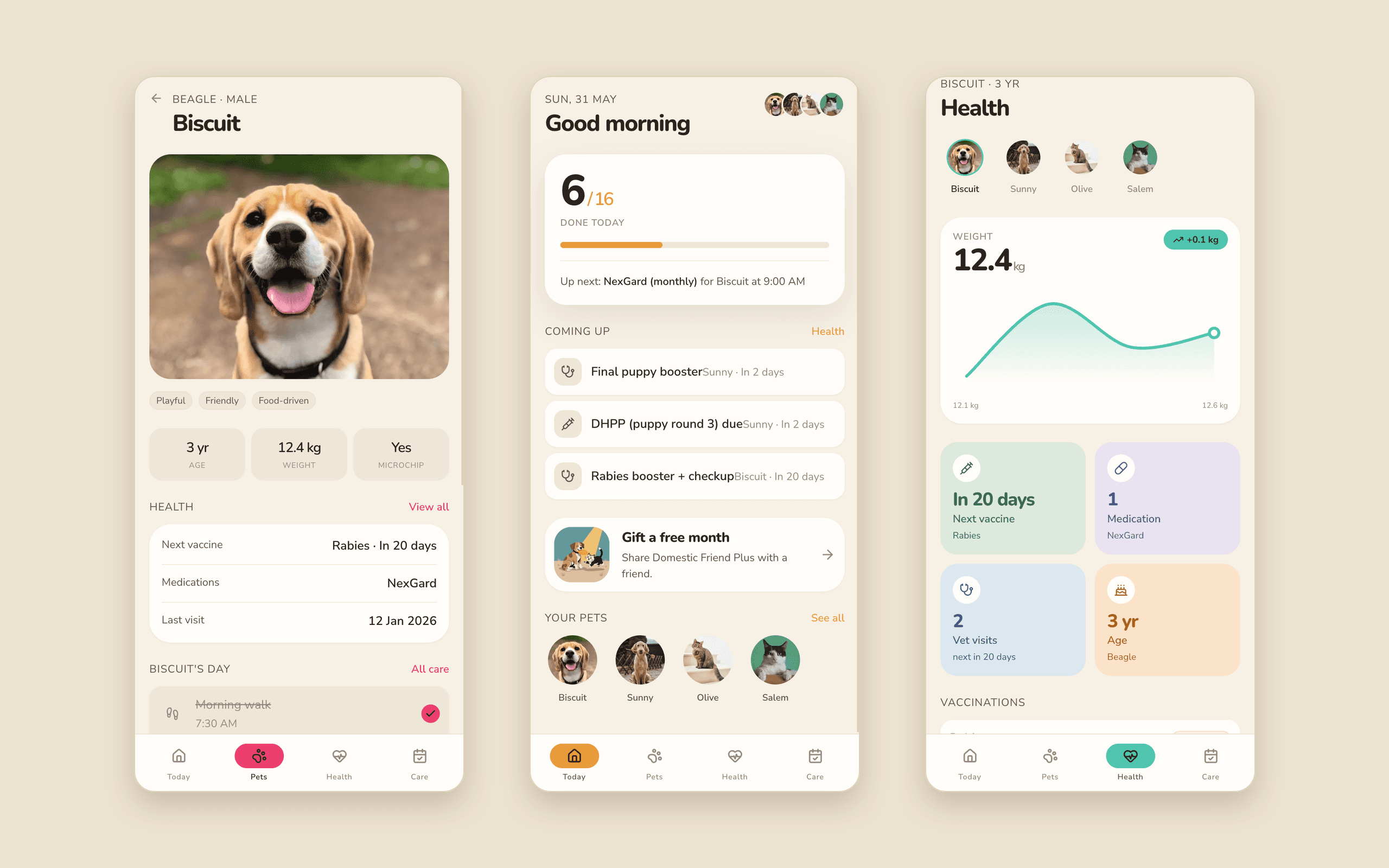
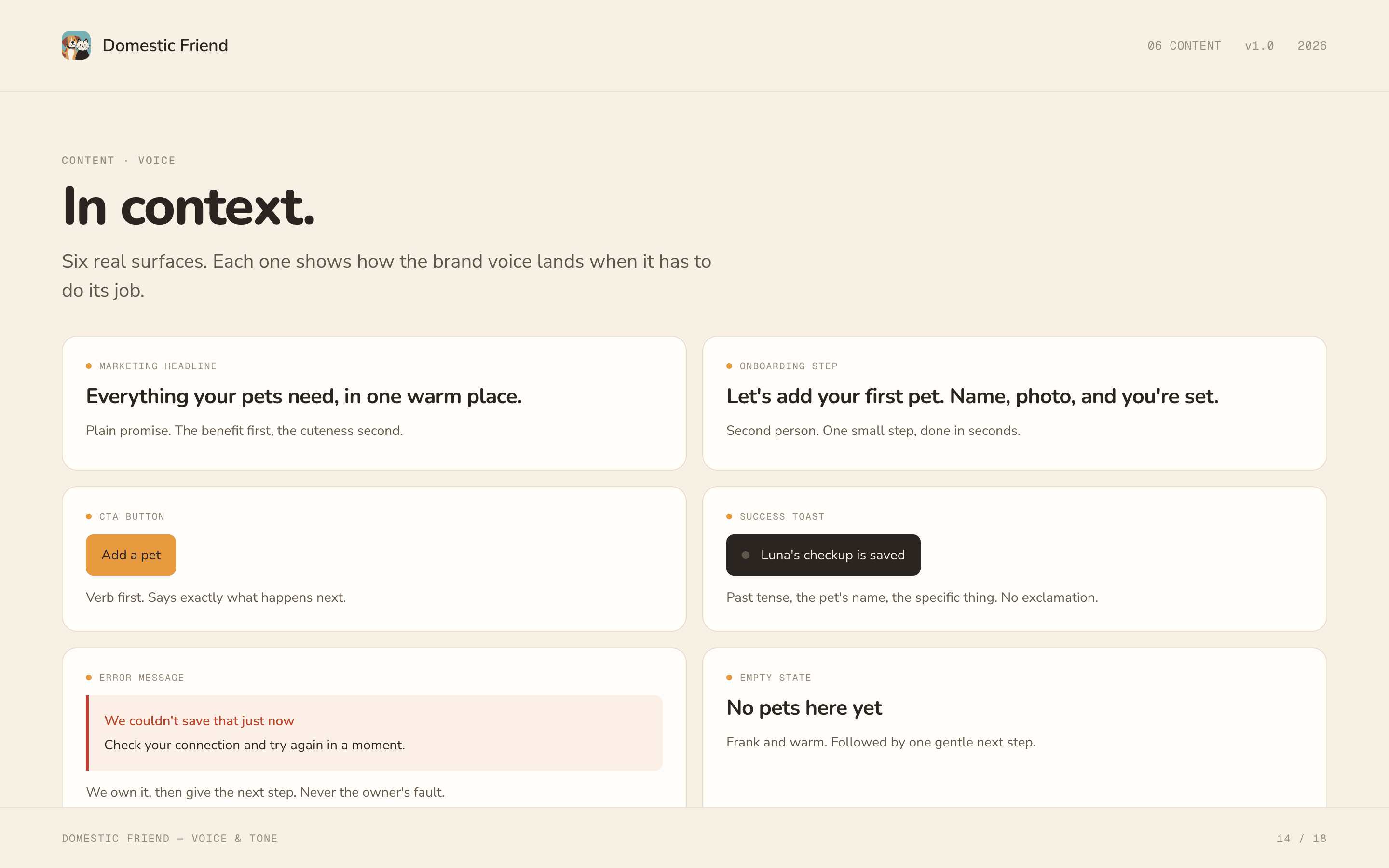
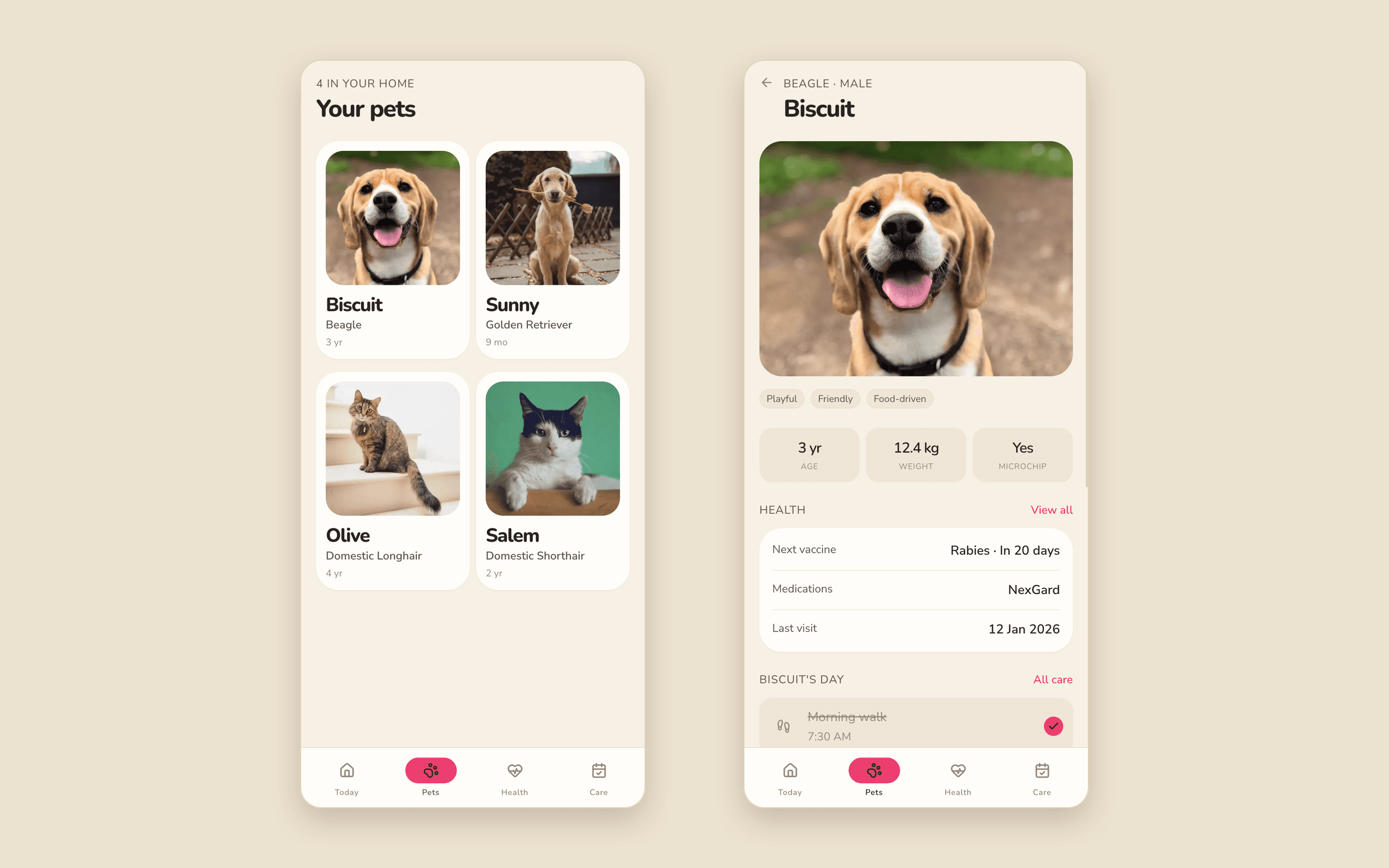
Domestic Friends is a mobile app for the people who share a home with a dog or a cat. It keeps each pet's profile, tracks their health, and lists the small daily tasks (a walk, a meal, a dose of medicine) that are easy to forget and easy to feel guilty about.
The app is built around one idea: looking after an animal is already a quiet kind of worry, so the tool for it should feel warm and steady, never clinical. The rest of this page is about how spacing, type, and color carry that feeling.
A warm surface
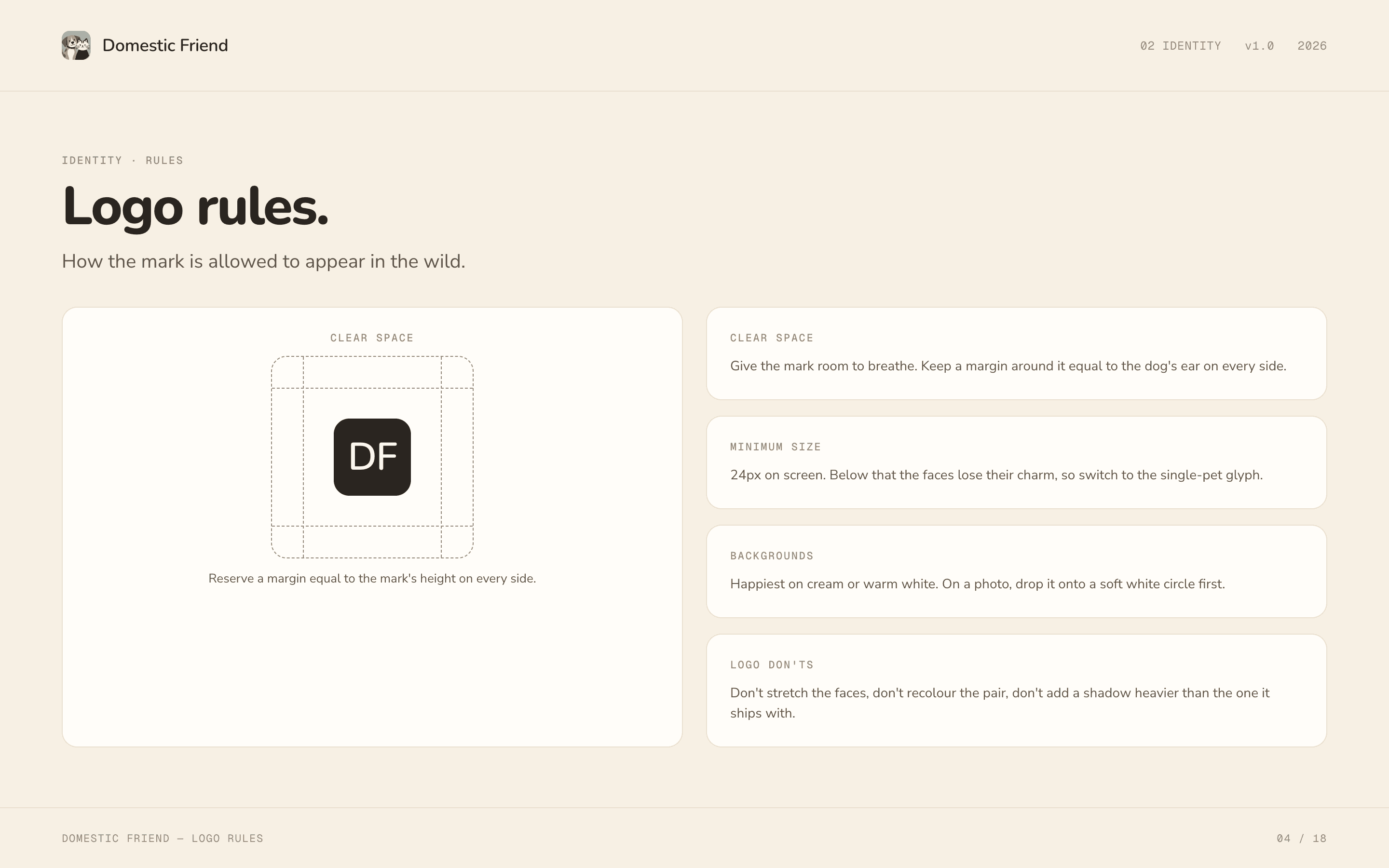
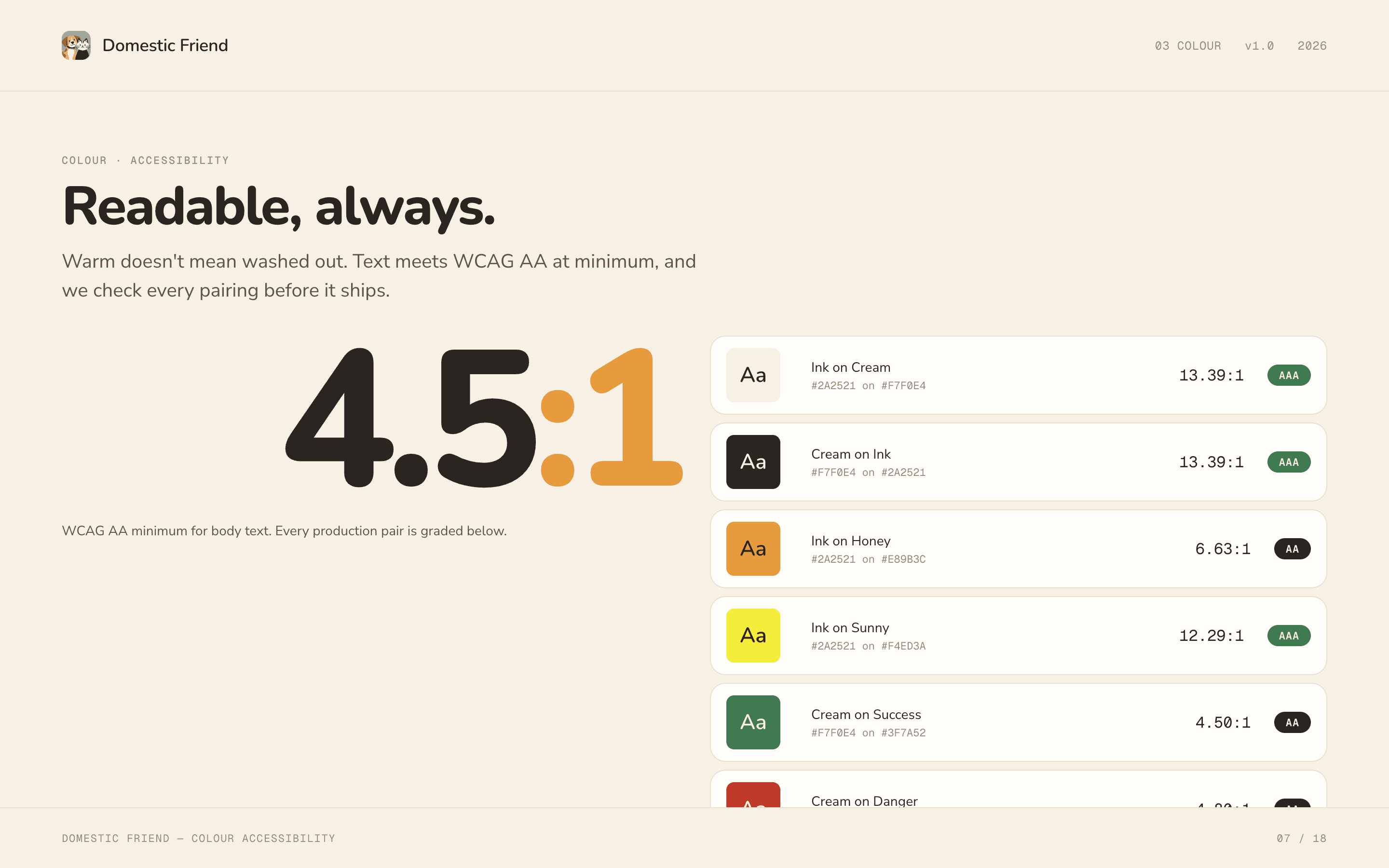
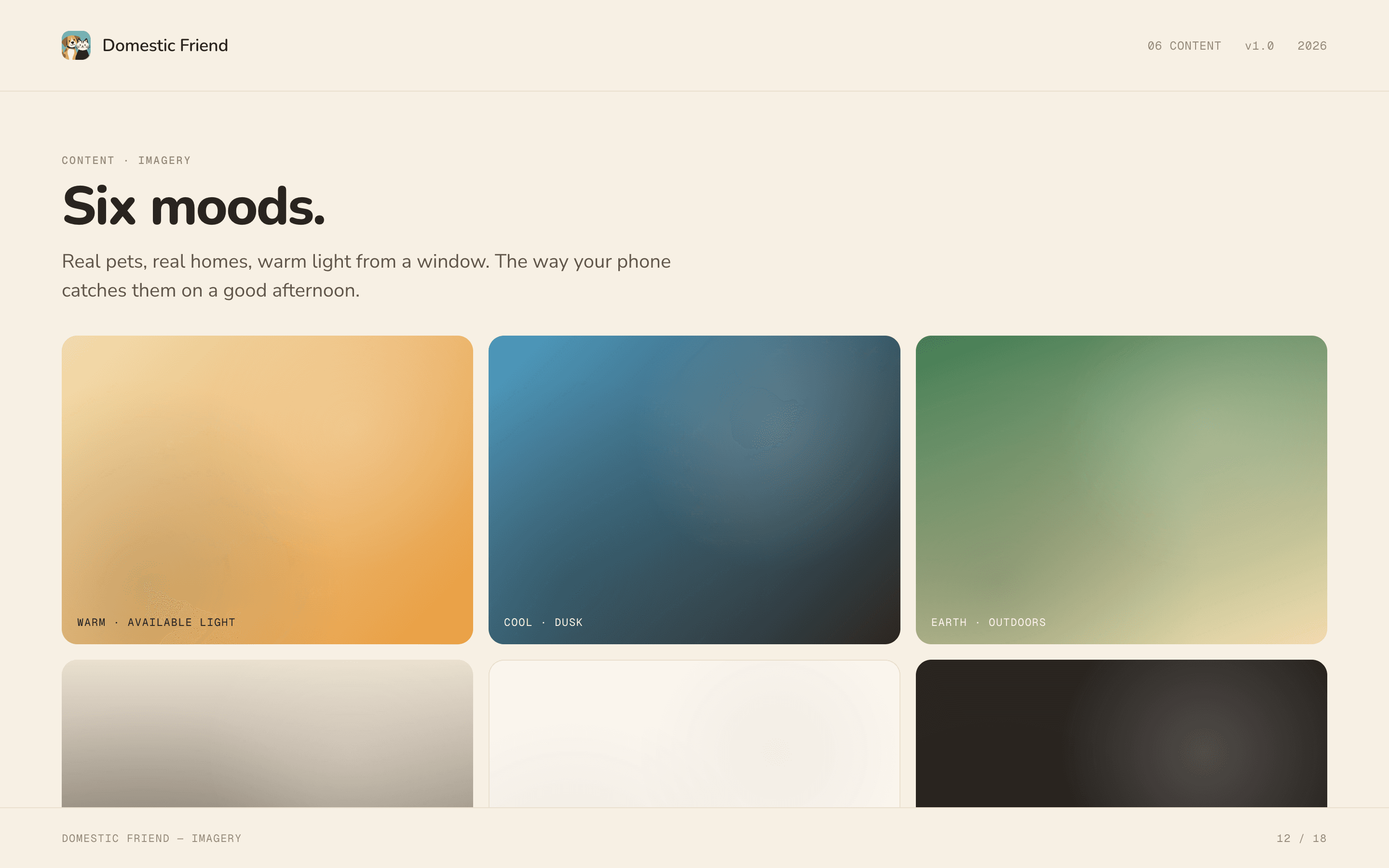
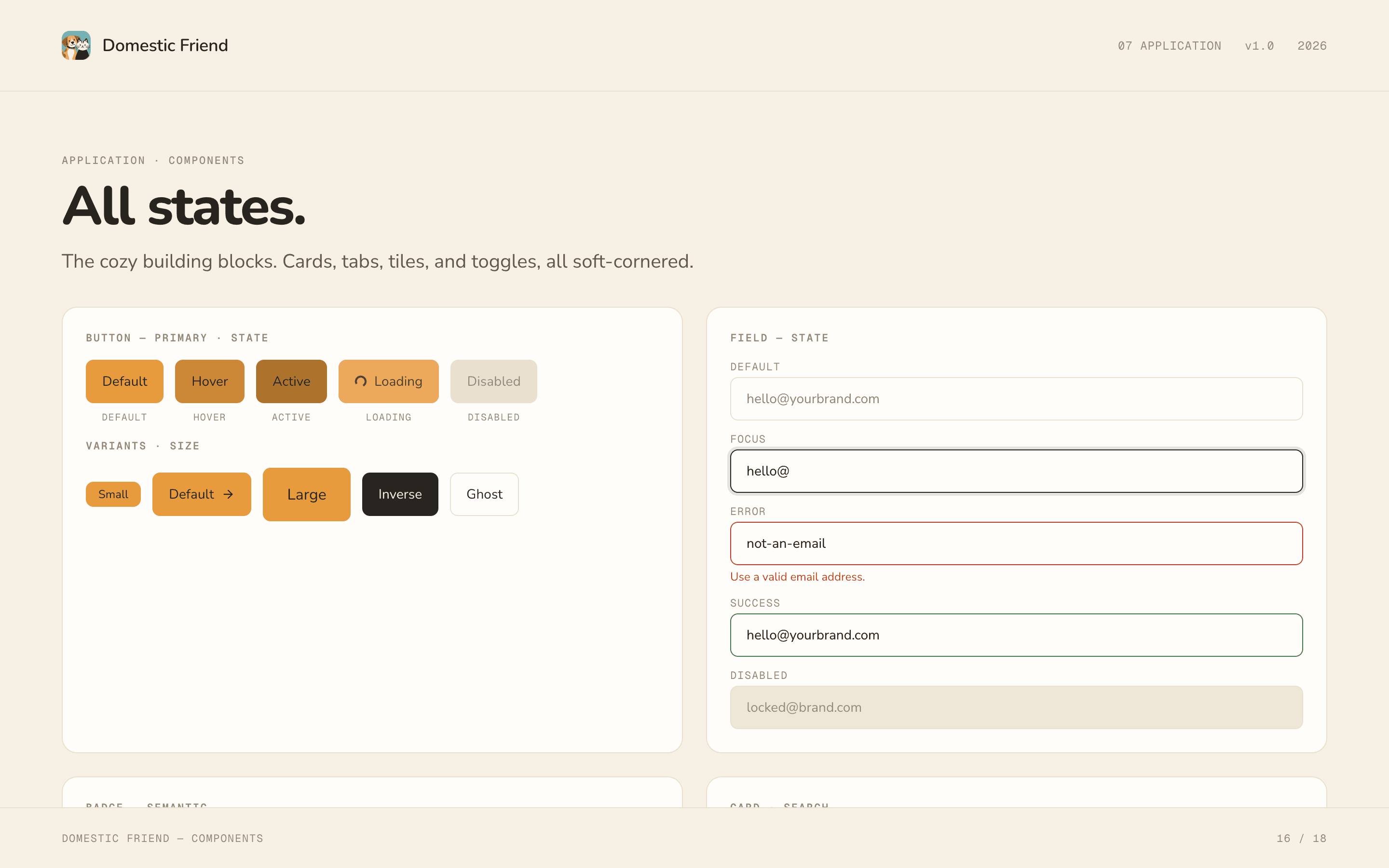
Everything sits on a warm cream, a few shades off white. Cards are a softer near-white and lift off the page on low, warm-tinted shadows, so the surface reads like paper rather than glass. There is no hard black anywhere. The darkest ink is a brown-black, the kind a printed book uses.
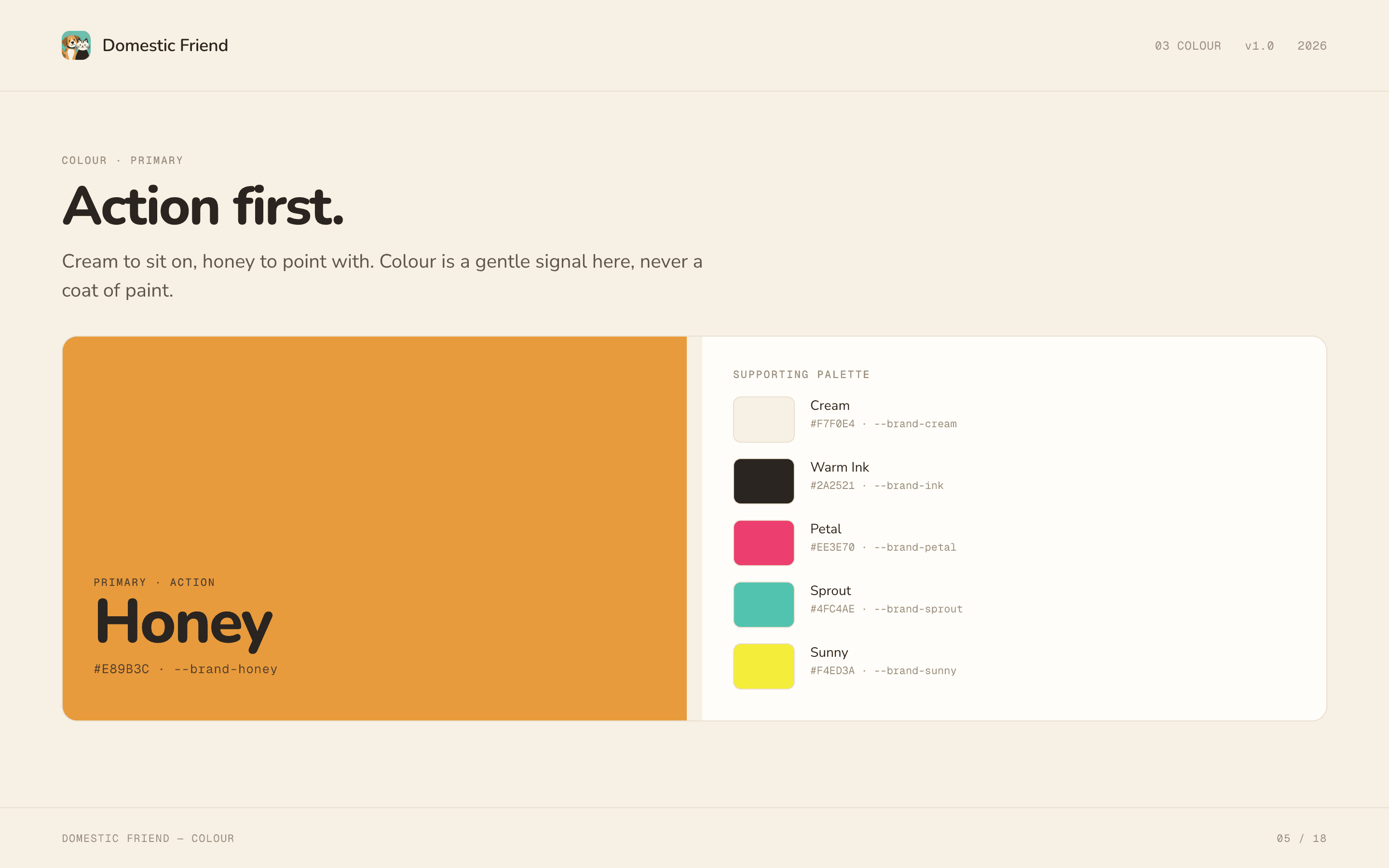
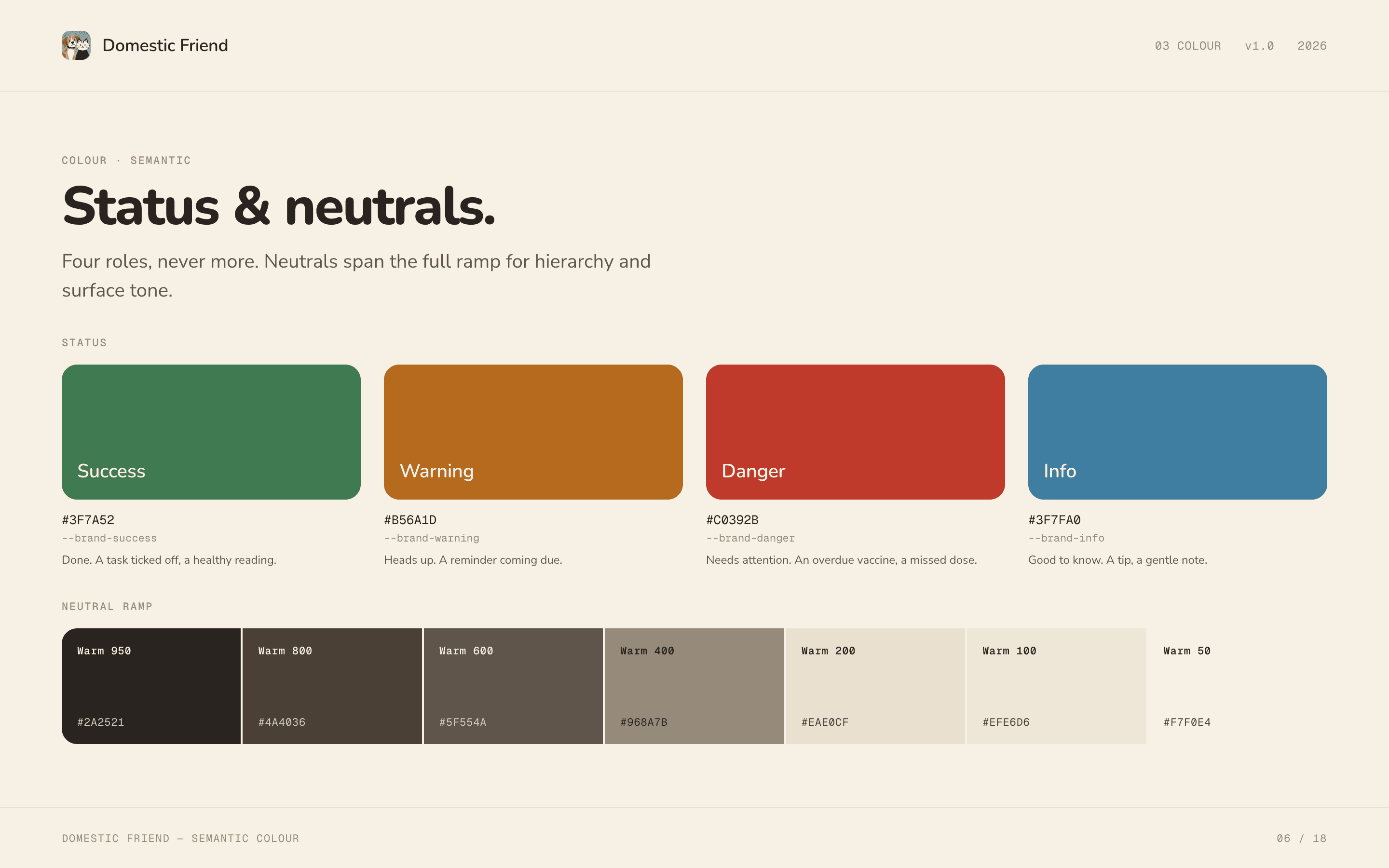
Honey is the only accent. It marks the things that matter in the moment (today's progress, the active tab, a highlight) and nothing else. Even the main button stays ink on cream, so the accent never spreads into decoration. Color is treated as a signal here, and kept rare on purpose.
A color for each room
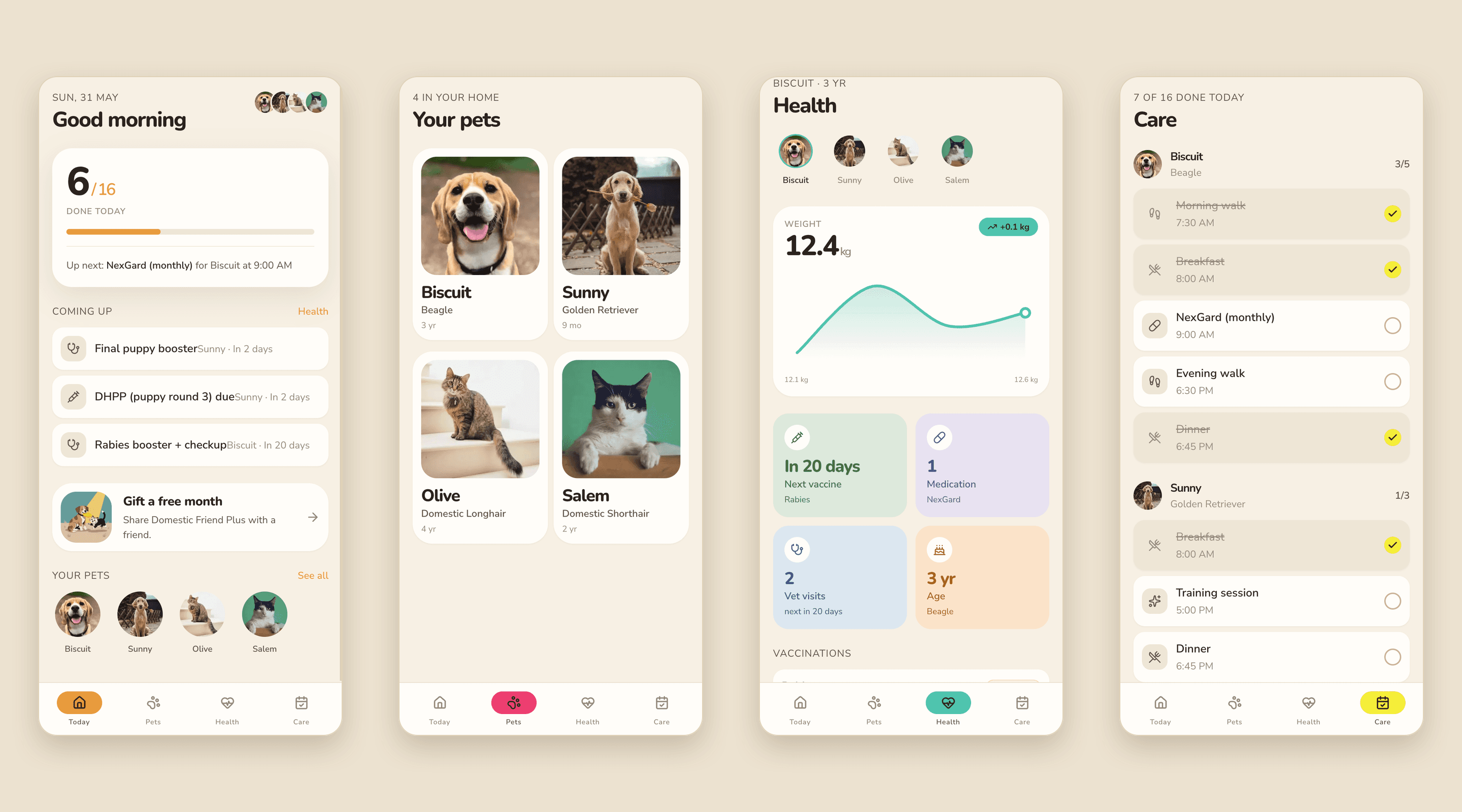
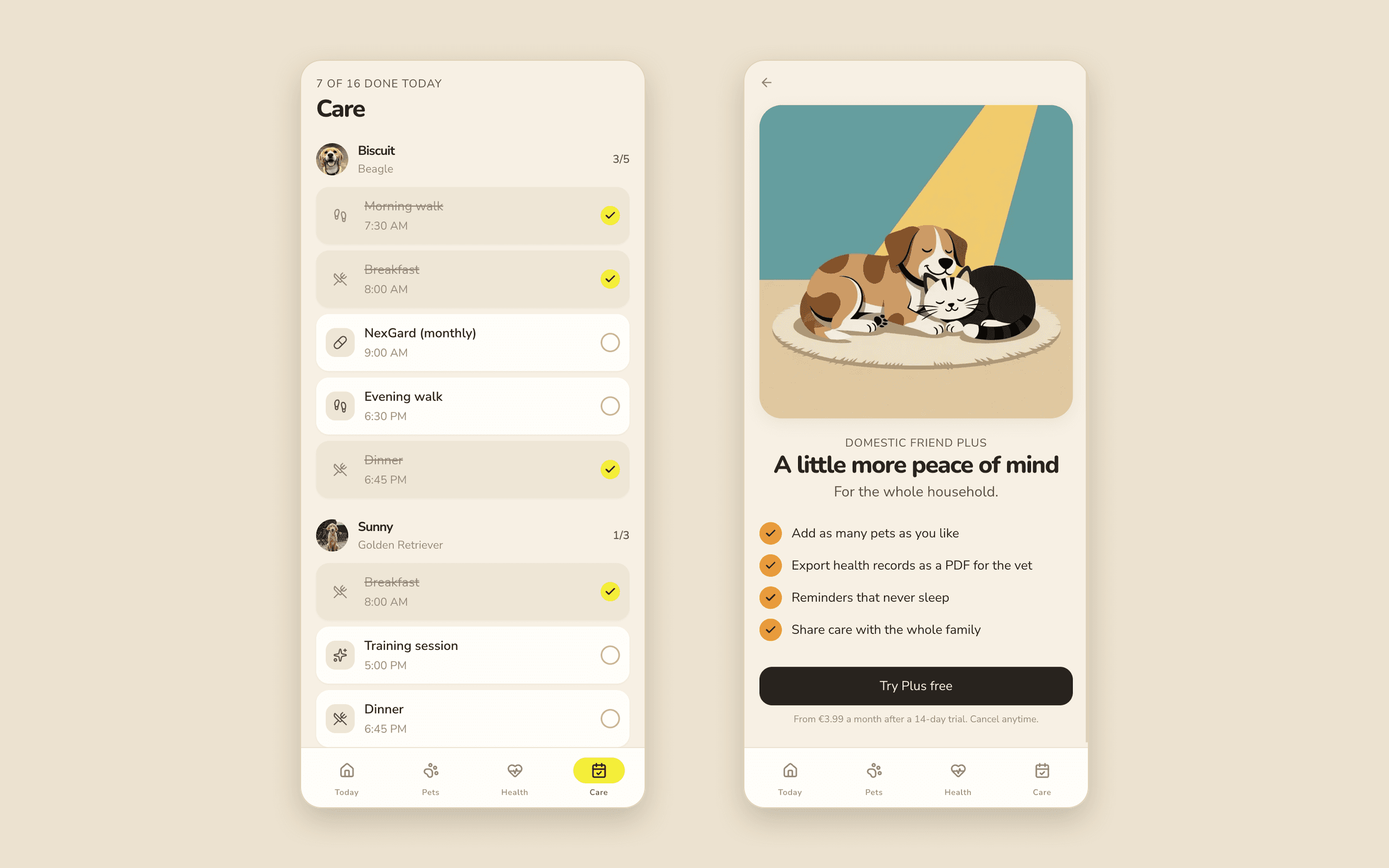
The app has four sections, and each one owns a color. Today is honey, Pets is pink, Health is teal, Care is yellow. That accent shows up in the section's tab, its links, and its checkmarks, so the color alone tells you where you are before you read a word.
The colors stay quiet. They run at low saturation, they appear in small doses, and the long lists of text beneath them hold the same warm ink everywhere. A finished task gets a colored check while the rest of the row keeps still. Nothing on the screen competes for attention it doesn't need.
Type you can read at a glance
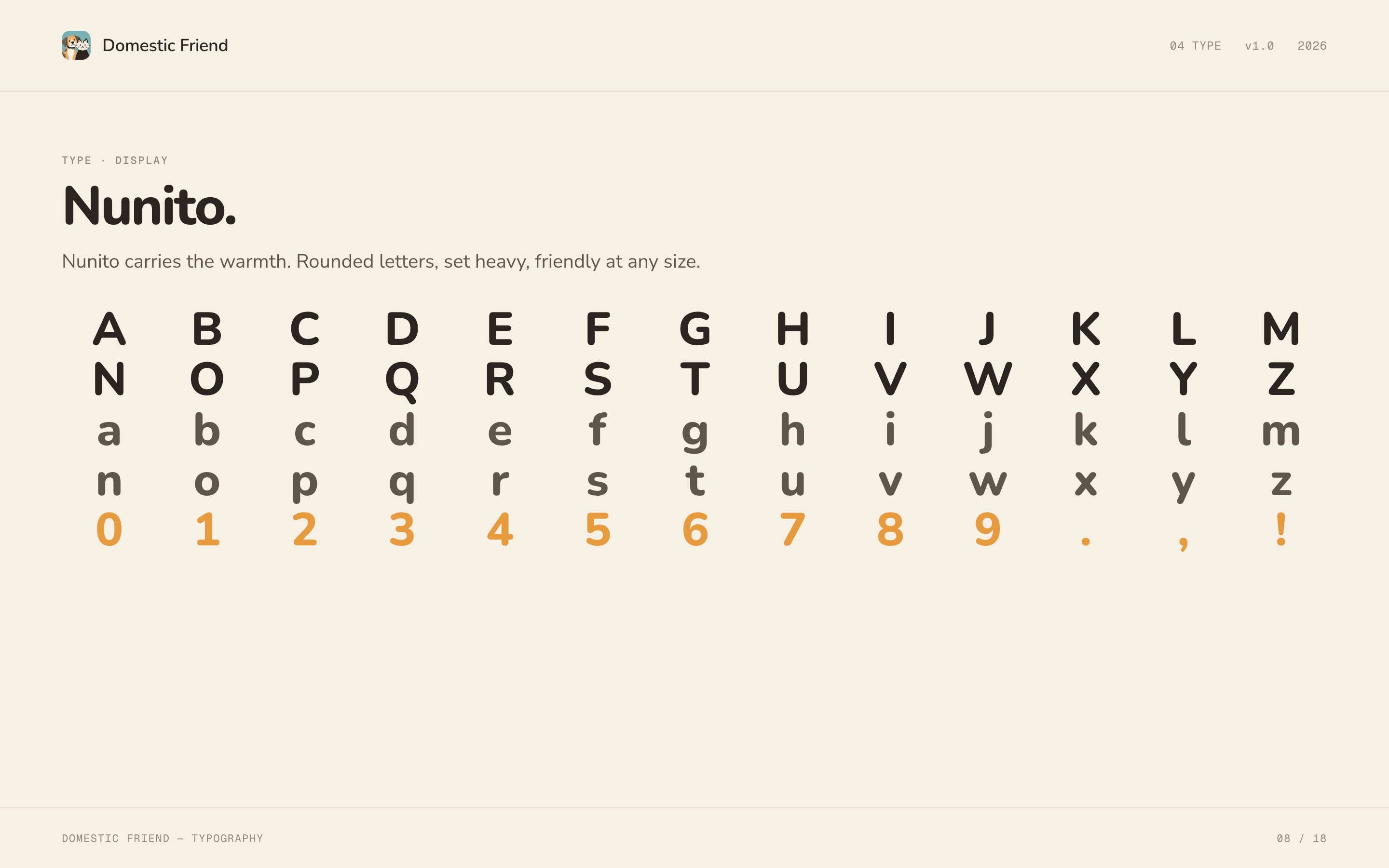
The app uses one rounded type family, Nunito, for all of its text. Rounded letterforms feel softer than the usual sharp interface fonts, which suits an app about animals, and they hold their shape at the small sizes a phone forces on you.
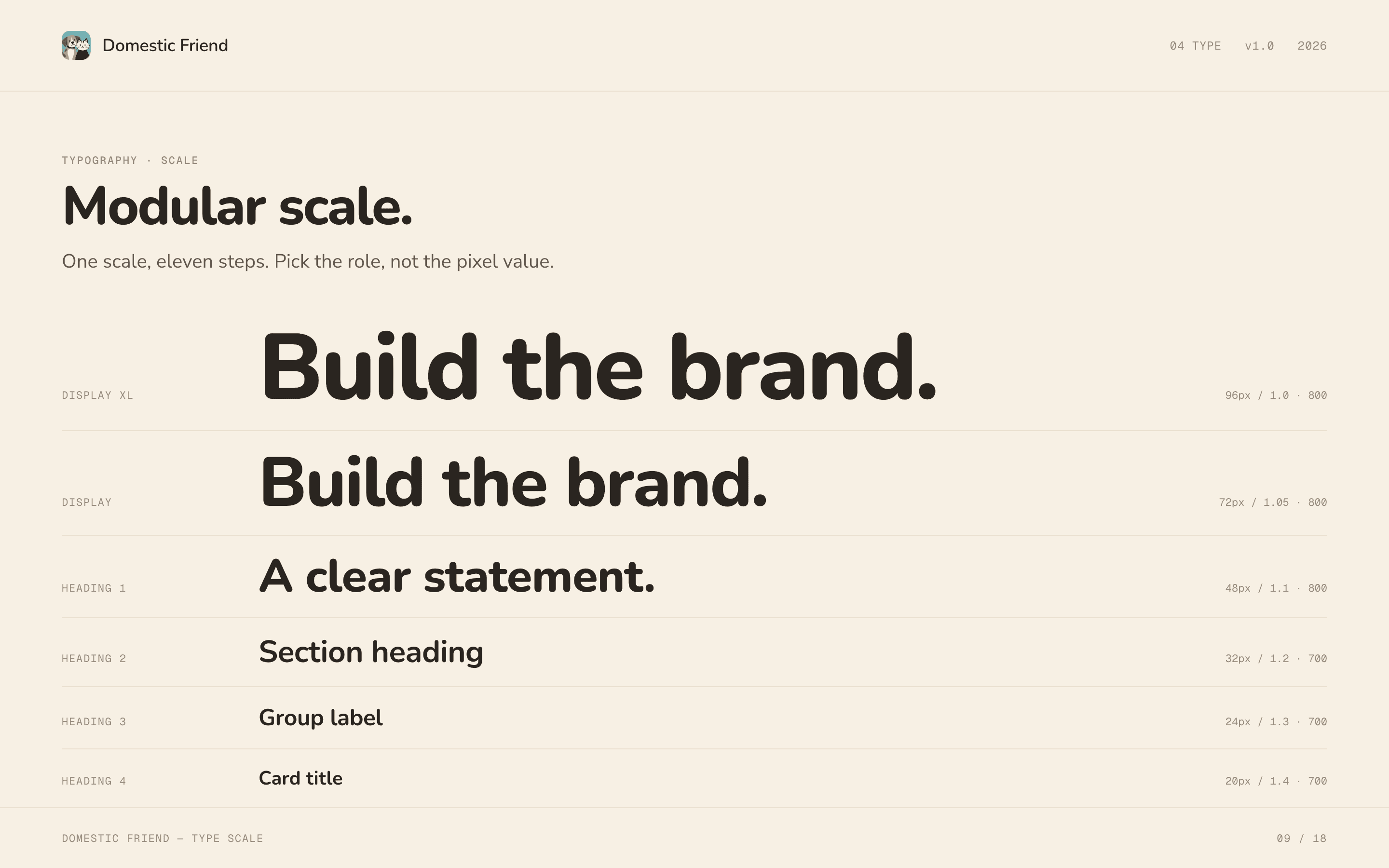
Every screen follows the same order. A small uppercase label sets the context. A large, heavy title says what you are looking at. Quieter text fills in the rest. Numbers get the boldest treatment of all, because a weight, an age, or a count of tasks done is usually the reason the screen was opened. The order never changes, so each new screen already feels familiar.
Room to breathe
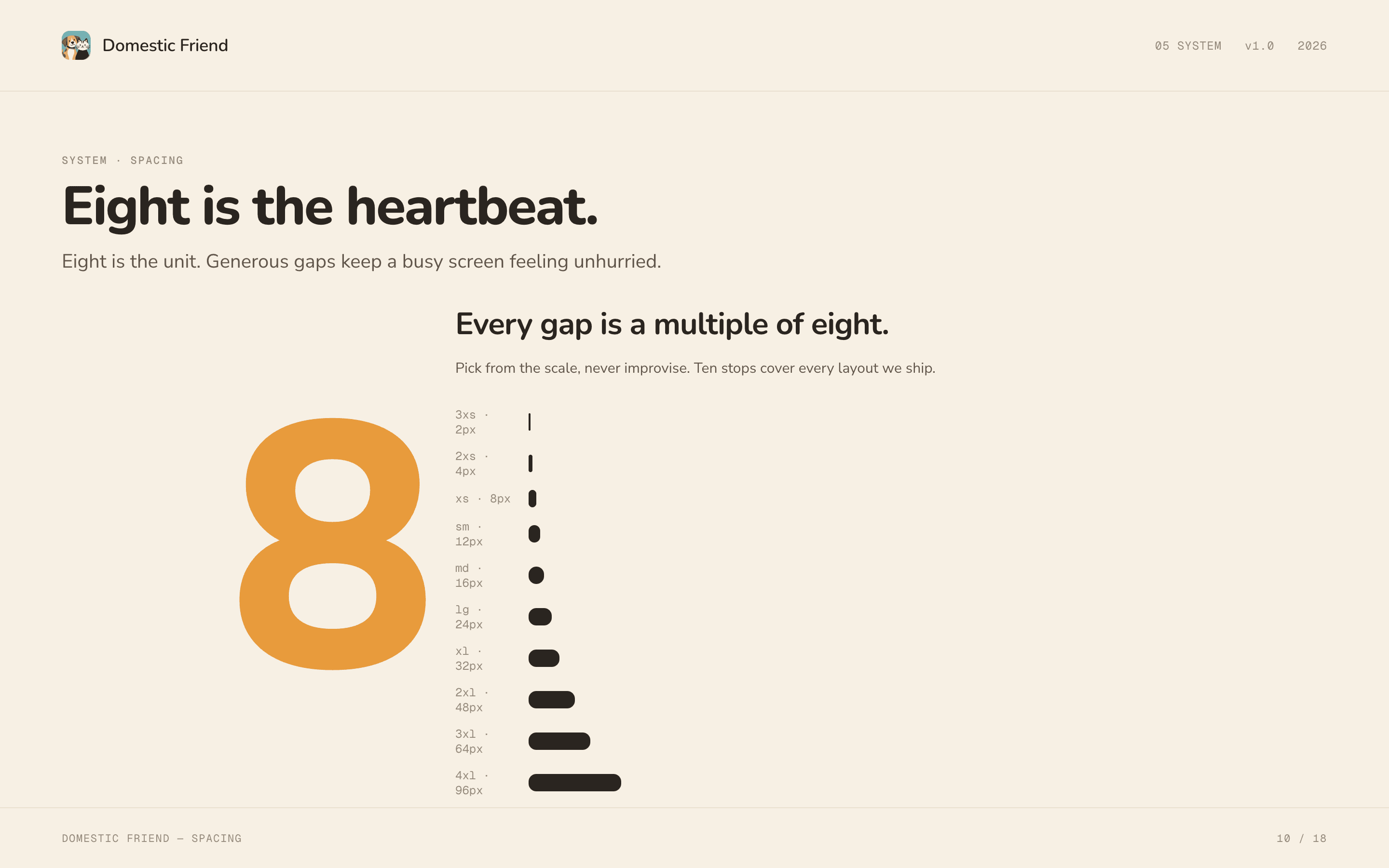
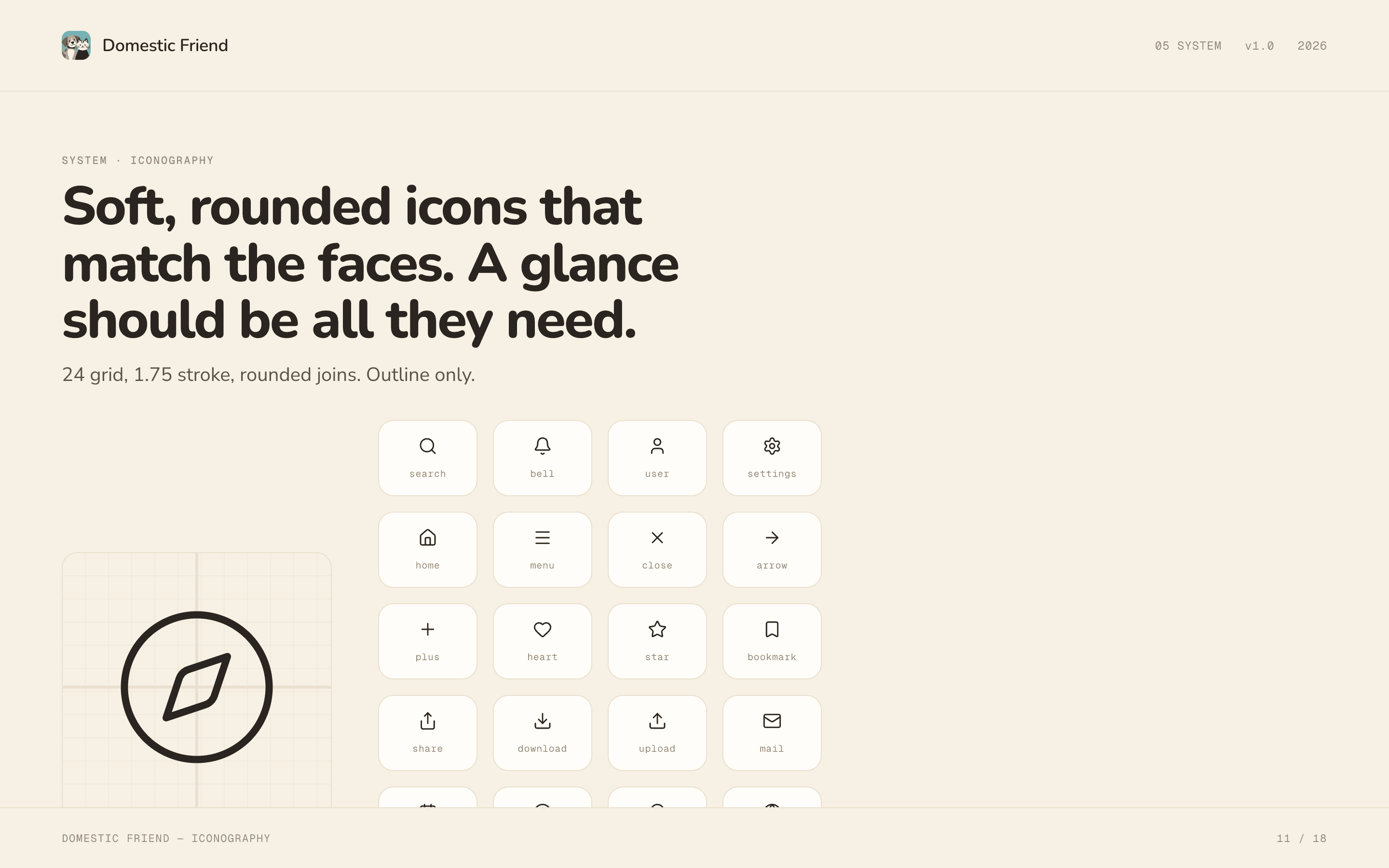
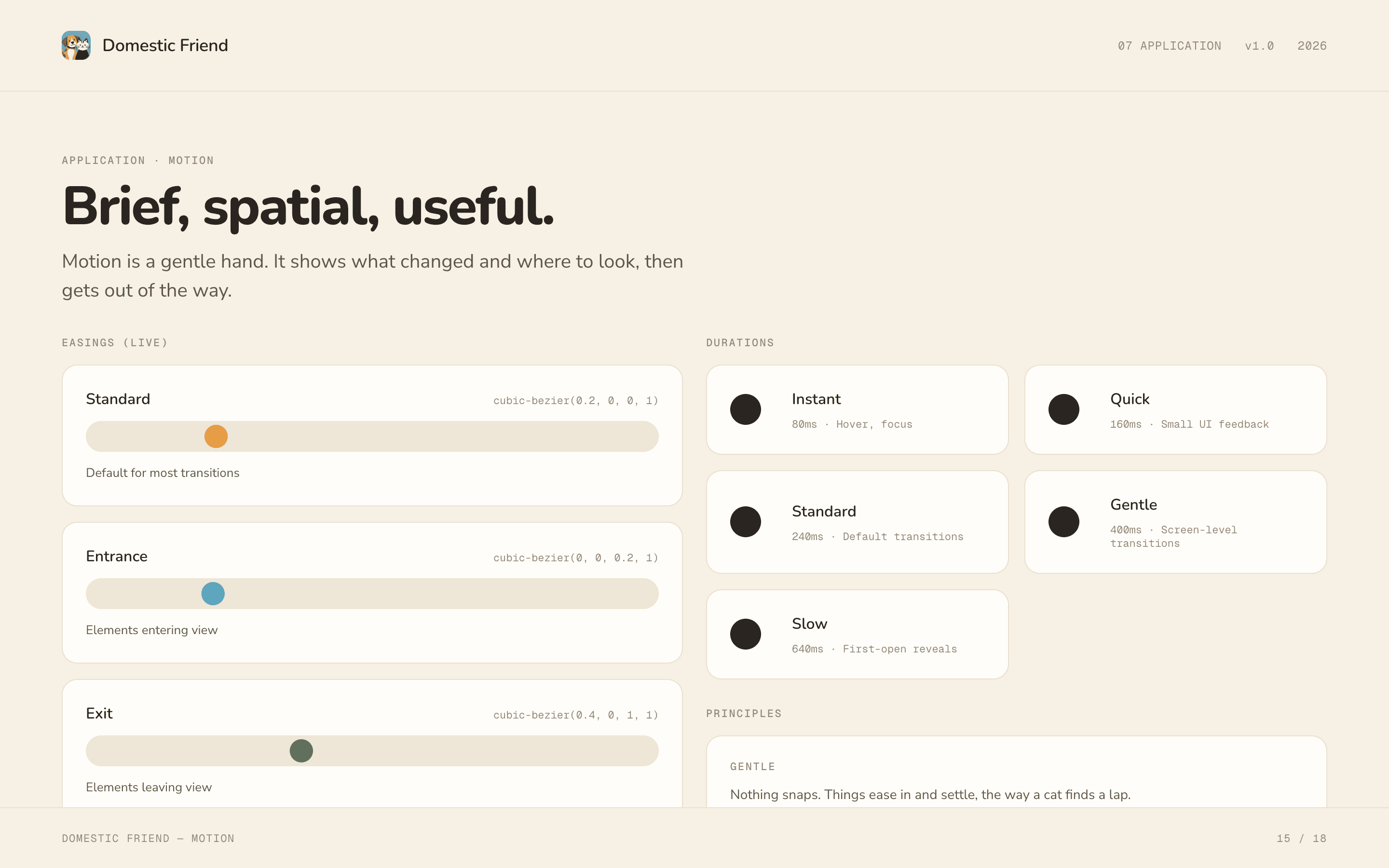
The whole app lives in one phone-width column, even on a wide screen, and it spends space freely. Cards keep their distance from each other and from the edges. Corners are rounded the whole way through: the buttons, the photos, the cards themselves. It is a small move, but repeated on every element it sets the tone.
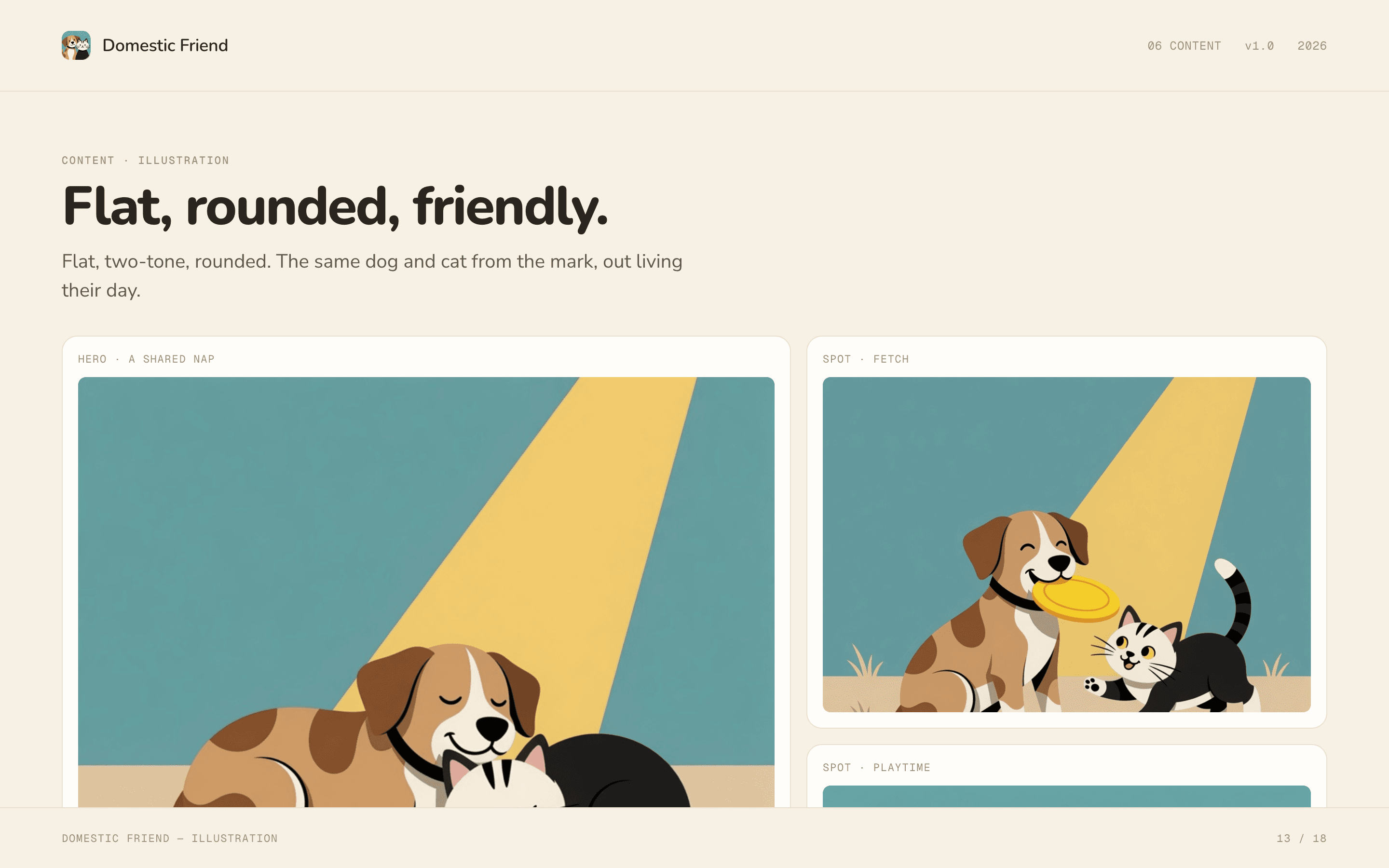
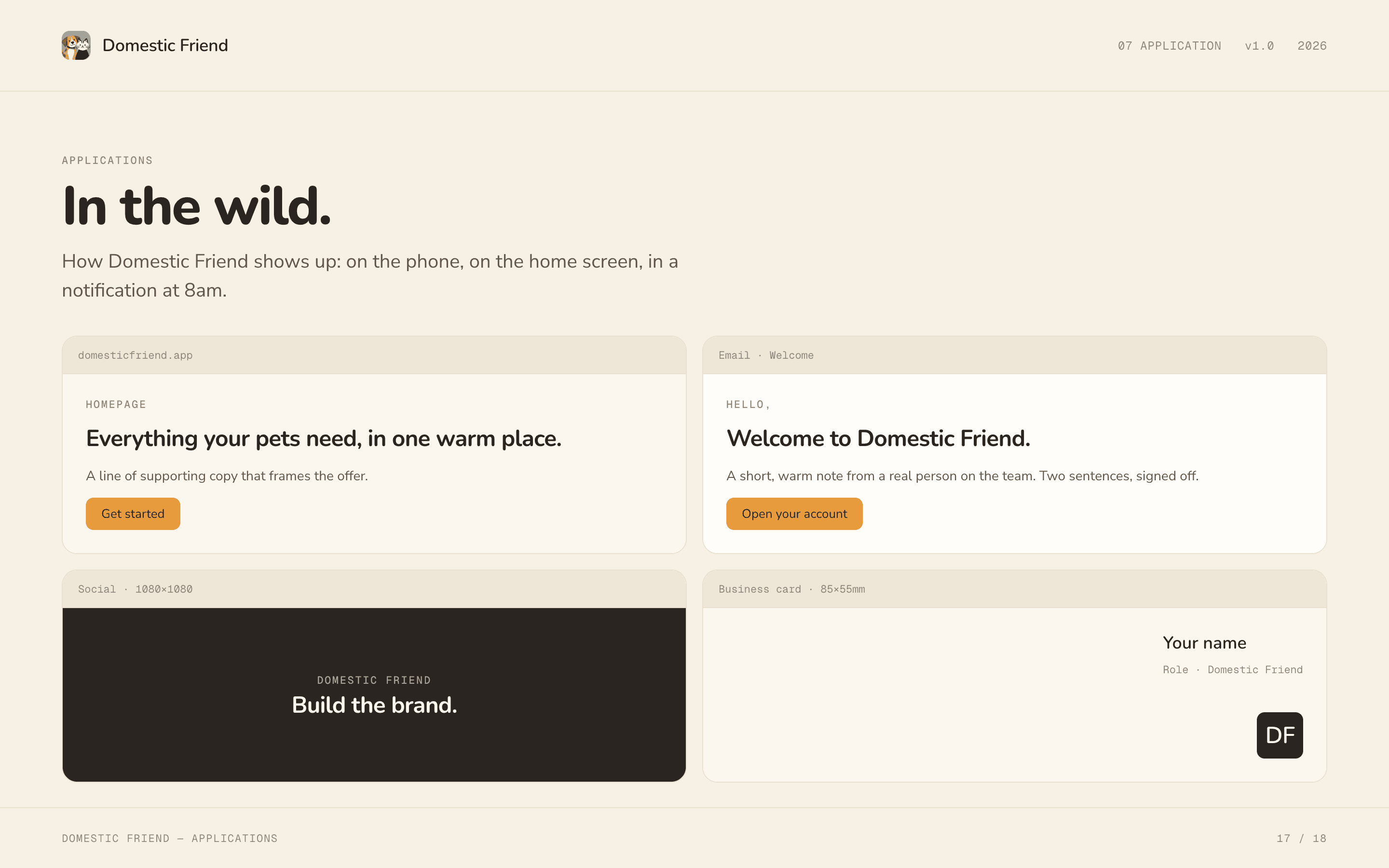
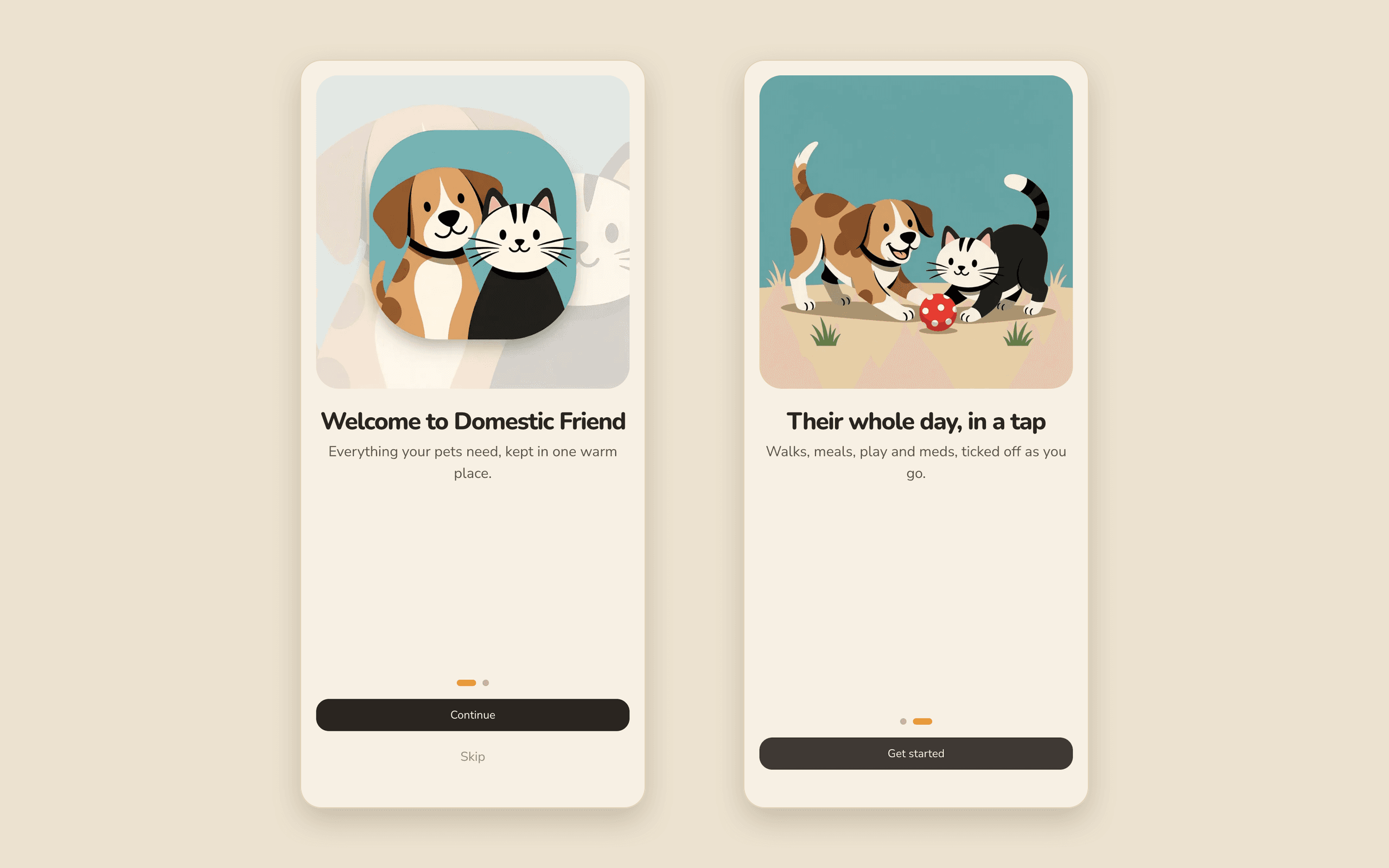
The images do the balancing. Real photos carry the pets, because a photo is personal in a way a drawing can't be. Flat illustrations are saved for the moments that are about feeling rather than facts: the welcome, the gift, the upgrade. Keeping the two apart lets the screens full of data stay plain, and lets the few warm screens actually be warm.
How it's built
The app is built in Next.js and React, with TypeScript throughout. It sits on a shared design system, the same set of building blocks used across the other projects here, re-dressed in the warm palette above, so the screens stay consistent with little styling of their own. You can switch between pets and tick a task off with the small delays a real app has, though nothing is saved between visits. The rest of the stack is just below.
Built with
Warmth is a design decision.
Soft color, rounded type, and a lot of space add up to a feeling: that someone anxious about a living thing is in steady hands. That was the whole point.