Designers shipped the code, and the performance review stayed the same
The AI in Design Report 2026 surveyed 900 designers. Half have shipped AI-generated code to production. Only 13% of their companies have updated how designers are reviewed or hired.
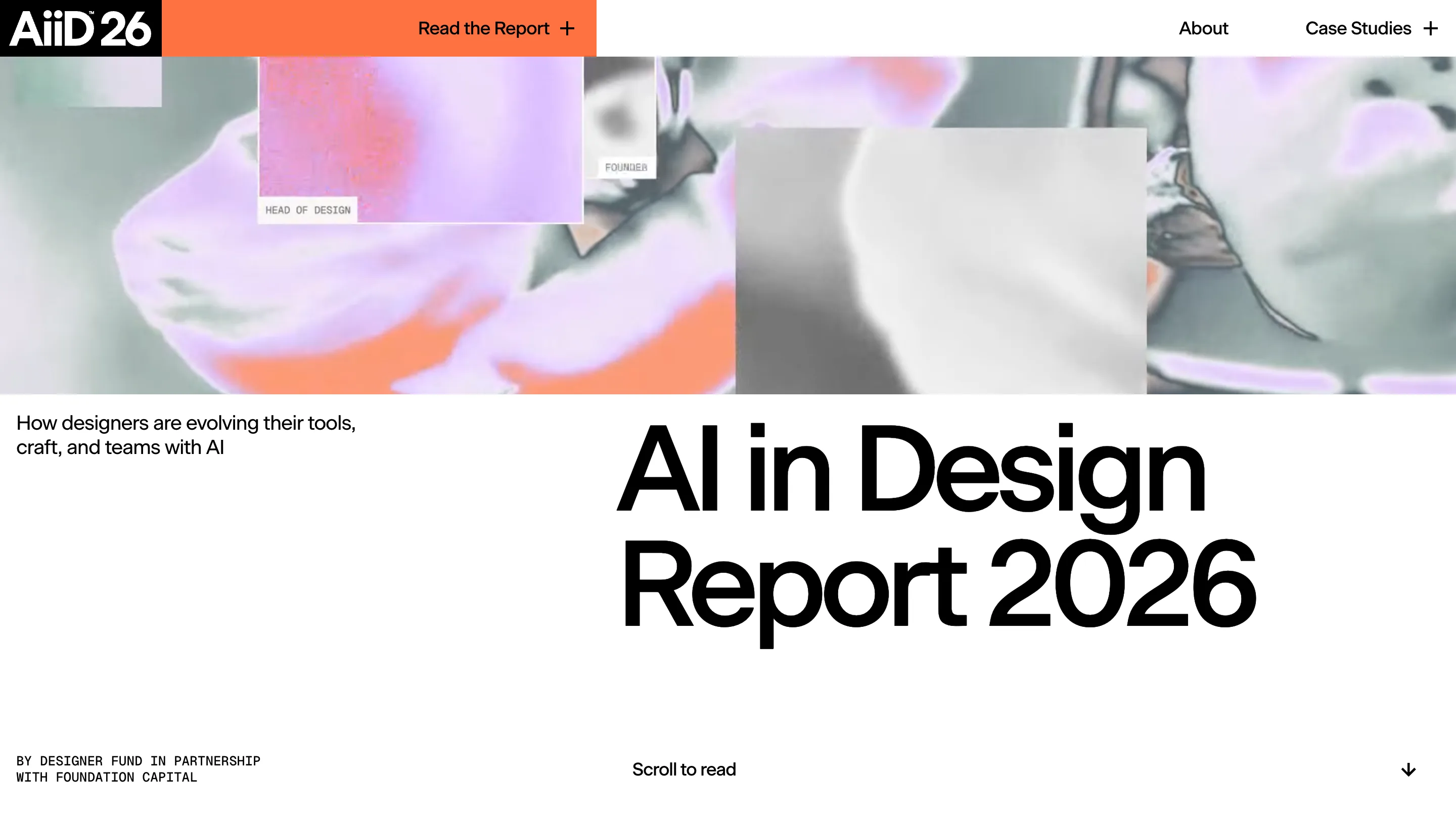
Half of the designers surveyed for this year's AI in Design Report have shipped AI-generated code to production. That's the headline number, and it's the one everyone quotes. The number I can't stop looking at is the one sitting three chapters later: 73% say the expectations on their output have gone up, and 13% of their companies have changed the performance review or the hiring bar to match.
The report is the second annual edition from Designer Fund, run with Foundation Capital. Published 15 June 2026. Over 900 designers across 60-plus countries, plus interviews with about 25 design leads at Stripe, Linear, Anthropic, Miro, DoorDash, Ramp, Samsara, Pinterest and others. It's free to read and it's long. The Craft chapter alone is marked 30 minutes.
What changed in the craft chapter
Weekly AI use went from 54% to 91% in a year. Daily use is at 75%. The average respondent now keeps 7 AI tools in rotation, up from 3. And the coding number splits sharply by company stage: 68% of designers at early-stage companies have shipped AI-written code, against 33% at publicly traded ones. Founders top it at 70%.
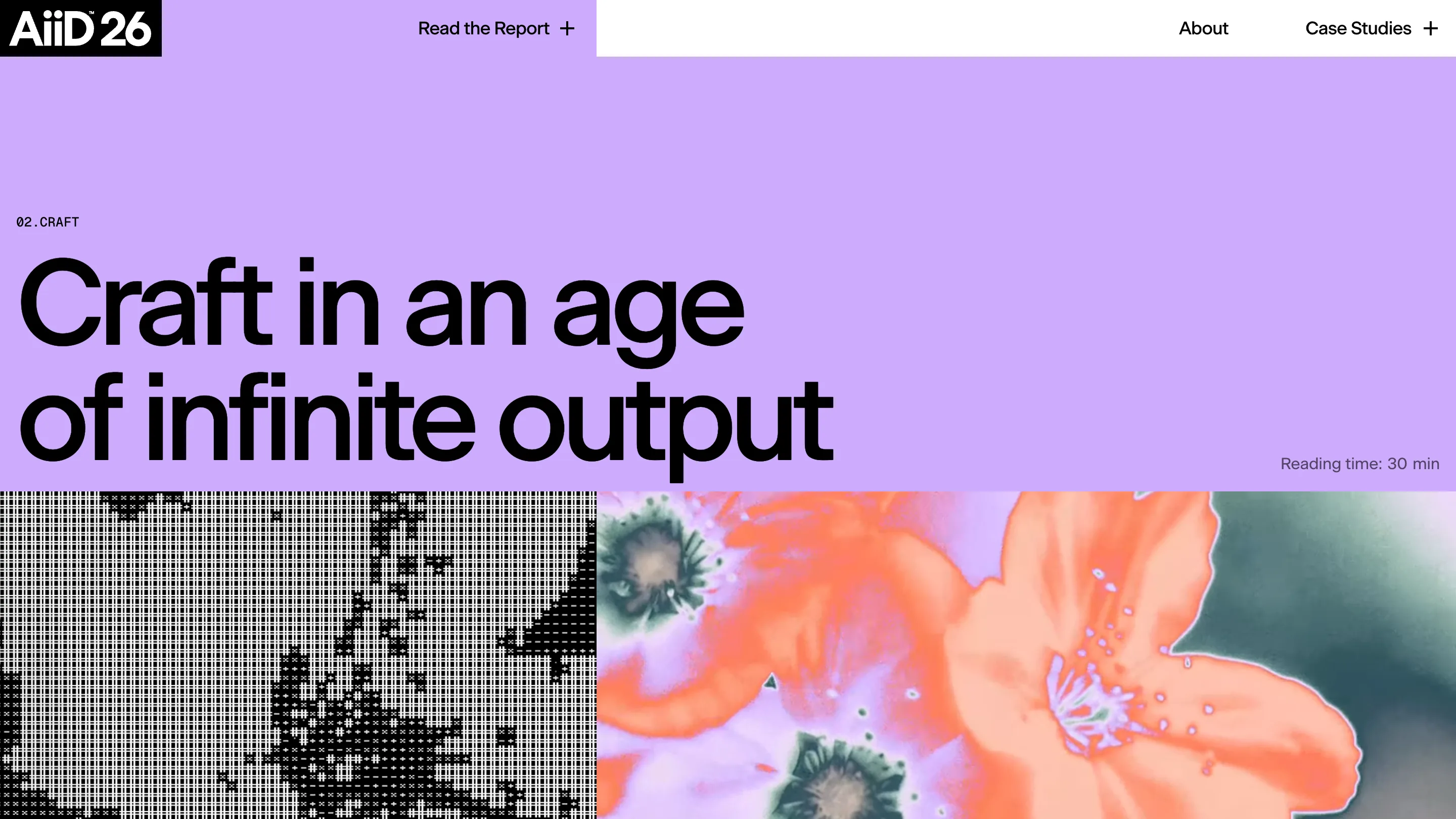
The deliverable moved with it. 43% now say their company expects a working prototype, not a static mockup. Karri Saarinen of Linear puts the limit on that plainly in the chapter: the hard part of design is rarely generating the form, it's understanding the problem well enough to know what should exist. Elizabeth Lin at Ramp says craft fundamentals matter more than before, because the tools will happily produce a lot of finished-looking wrong.
The teams chapter is where it gets uncomfortable
65% of designers report doing more product and engineering work. 40% say PMs and engineers are now doing design work. 34% say ownership has got messier. And the number that jumped hardest: designers reporting less collaboration went from 5% to 20% in twelve months. Four times, in a year. The report ties it to solo sessions in a terminal replacing live back-and-forth with teammates.
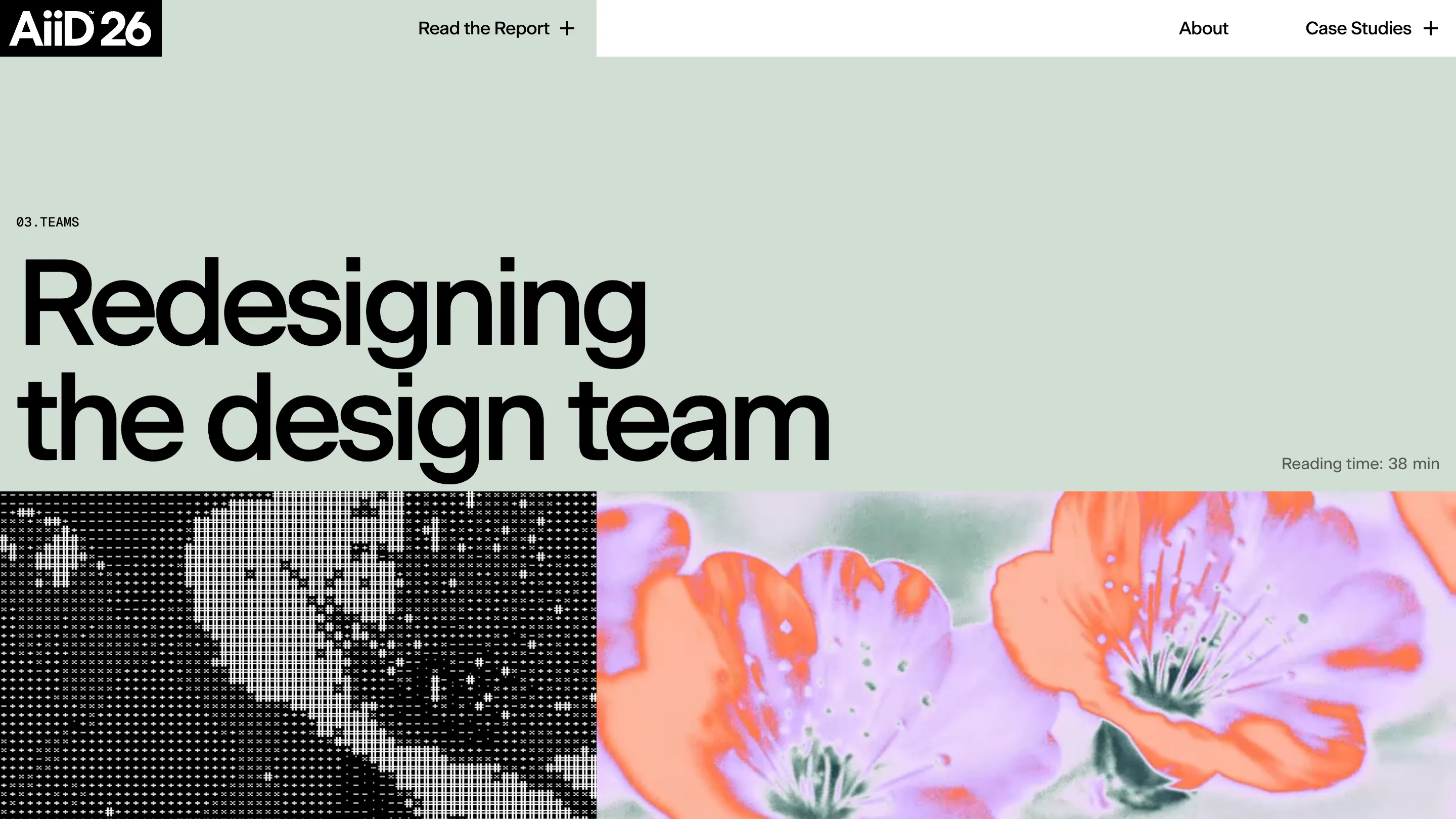
Meanwhile people are teaching themselves. Peer learning as a source went from 24% to 70%. Leadership recommendations dropped from 32% to 16%. Designers are learning this from each other in Slack channels, and their managers are learning it from them.
The site itself is a good piece of work
Worth saying, since I screenshotted it. Every chapter opens on a flat field of a single color, lilac for Craft, sage for Teams, with the number and name set small in mono at the top. Under each headline runs a split band: the same solarised flower photograph rendered twice, once as a black and white ASCII dither, once in full orange and purple. Same source, two processes, one of them mechanical. For a report about machines rendering our work, that's a quiet way to make the argument without writing it down.
The gap is the story
Here's my read. 19% of design leaders cut headcount while keeping or raising output expectations. 50% now weight AI fluency in hiring. Only 5% care less about craft quality. So the bar went up on both axes at once, and 87% of companies have not touched the document that decides whether you cleared it.
No new model fixes that one. Somebody has to sit down and rewrite what a senior designer is expected to produce in 2026, then rewrite the comp band under it. Until that happens, the 73% are being measured against a rubric written for a job that no longer exists.
Featured: AI in Design Report 2026, by Designer Fund and Foundation Capital