Industry · 3 min · 3 August 2026
Porto Rocha made a working yo-yo with Nano Banana Pro, and left the prompts on the page
Porto Rocha and Google DeepMind built a whole brand, YOYOYO, around a 3D-printed yo-yo generated with an image model. The interesting part is what they chose to show: the prompts, and a credit list of twenty humans.
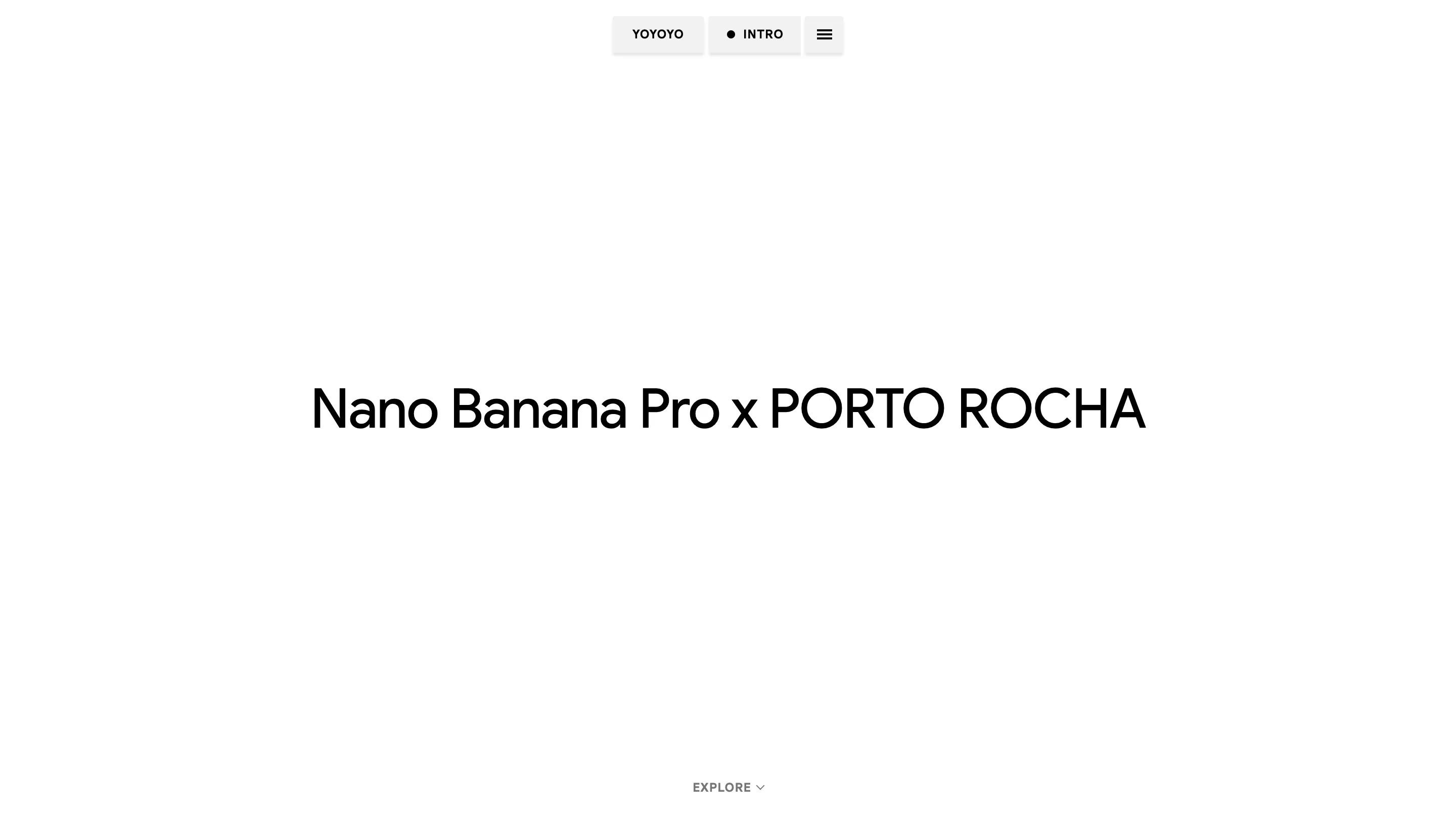
Porto Rocha and Google DeepMind spent a project inventing a yo-yo. A working one, 3D-printed from proportions the model generated, wrapped in a brand called YOYOYO and published as a case study at yoyoyo.ai on 3 August. The whole thing is a test: can Nano Banana Pro, Google's latest image model, hold a brand together across a product, its packaging, photography, and a store, and still land somewhere a designer would sign off on.
I went in ready to roll my eyes. I came out taking notes.
They printed the thing
The yo-yo is an orange spoked disc with three rings set into the face, closer to a fidget object than the classic two-halves-and-an-axle. Porto Rocha used the model for what they call rapid volumetric studies, pushing on balance, softness, and core geometry, then printed a functional unit through a partner, Estudi-Image. That last step is the one I respect. A pretty render forgives bad proportions. A yo-yo that has to spin on a string does not. The geometry had to be real, and they made it real.
The prompts are on the page
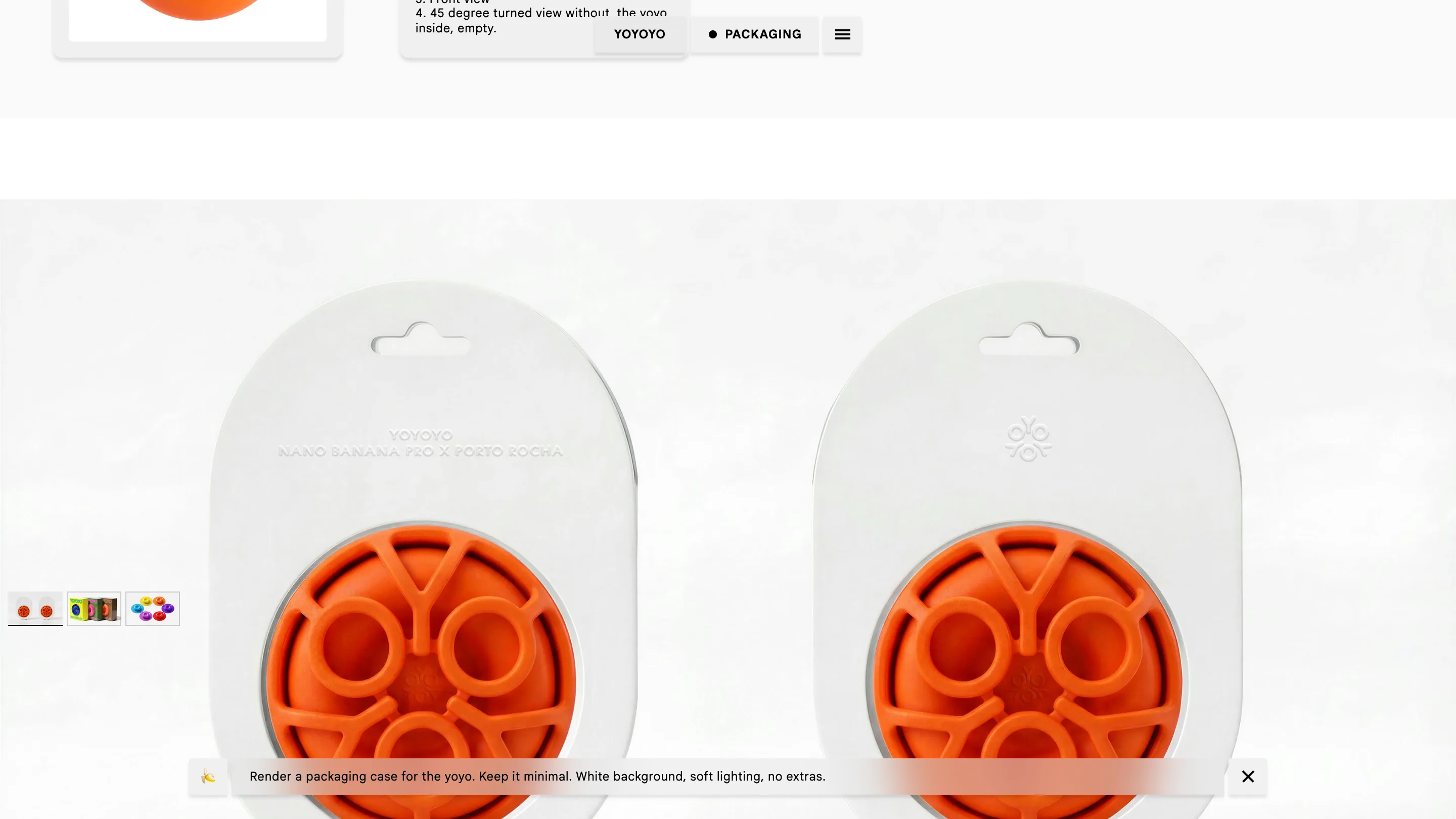
Scroll to the packaging section and you get a white blister pack, the logotype embossed into the plastic shell, the yo-yo sitting in its die-cut well. Under it sits the instruction they actually typed: "Render a packaging case for the yoyo. Keep it minimal. White background, soft lighting, no extras." They left it in. The whole site reads like a lab notebook, the prompt next to the output. Most studios would have scrubbed that and sold you the magic. Showing the prompt says the plain thing out loud: the direction was the work, the model was the hand.
Look at the credit list
The summary page names around twenty people. Felipe Rocha and Leo Porto on creative direction. Four on design, two on motion, two on interactive, a copywriter, a project manager, an account director, a web developer. Google DeepMind is credited too: Bea Alessio and Naina Raisinghani on product, Radu Soricut in technical leadership. For a project you could lazily caption "AI made a toy," that is a lot of named humans. The type helps the case, Google Sans paired with OT Capitalis Monoline, black on white, set plain and sure of itself.
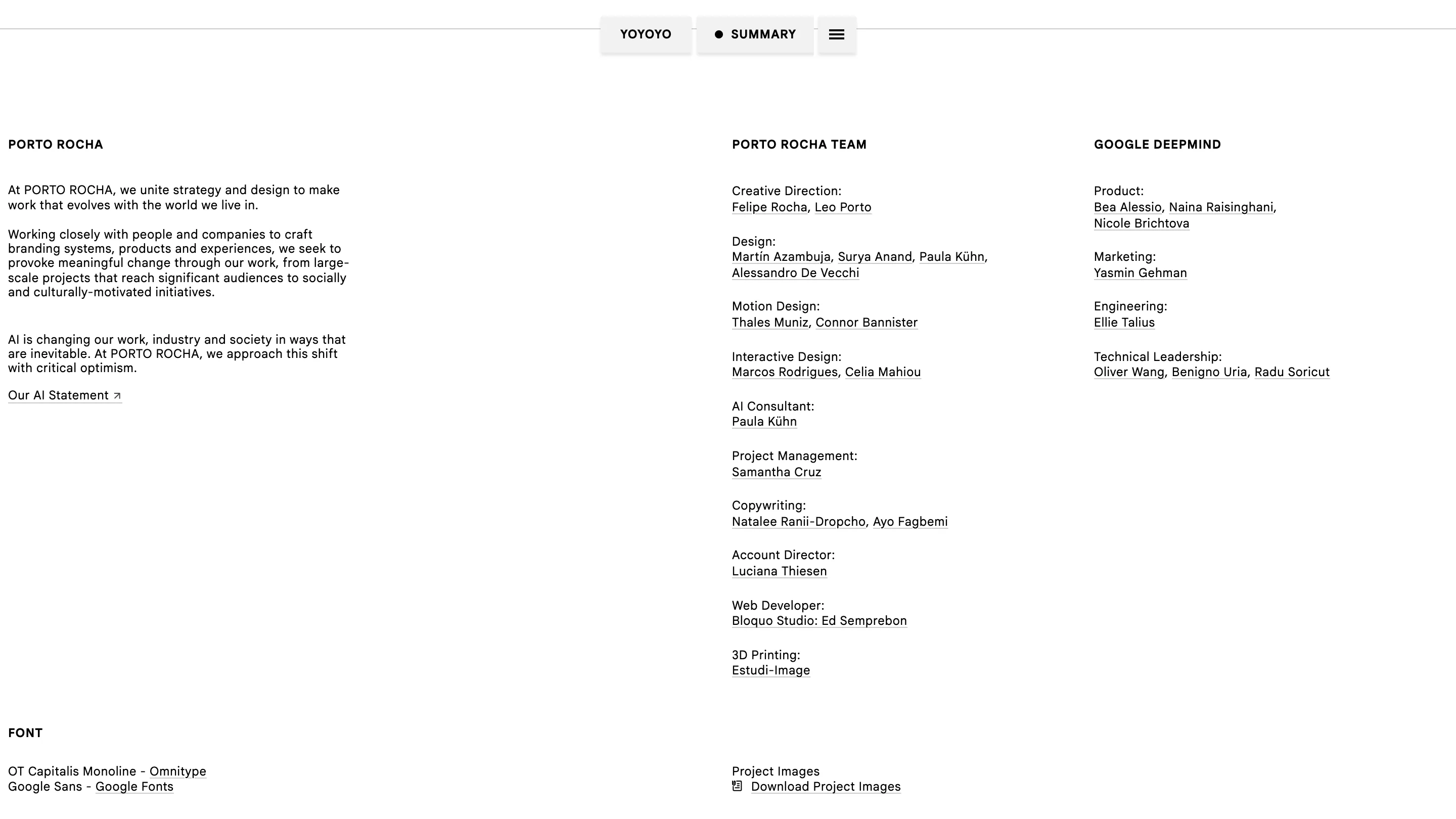
Porto Rocha's own line, on that same page: "AI is changing our work, industry and society in ways that are inevitable. At PORTO ROCHA, we approach this shift with critical optimism." Associate design director Martín Azambuja framed it as a way to widen what design can do while the human judgment stays in charge.
What I'd take from it
Here's the fact I keep circling. The model made hundreds of options. The crew still decided which yo-yo could spin, which pack read clean, which frame made the cut. That job didn't move. If you make digital products, the YOYOYO page is a quiet argument about where your value sits now. Producing the variations is getting close to free. The taste and the judgment that picks one and prints it is the part someone pays for. Generation got cheap. Direction got more valuable. Porto Rocha built a yo-yo to say so, and the prompts they left on the page are the receipt.