Stack Overflow rebranded around the answer an LLM can't scrape
Koto reframed Stack Overflow's identity around verified human knowledge, the one asset the models that gutted its traffic can't reproduce. The craft holds up. The product it shipped into complicates the argument.
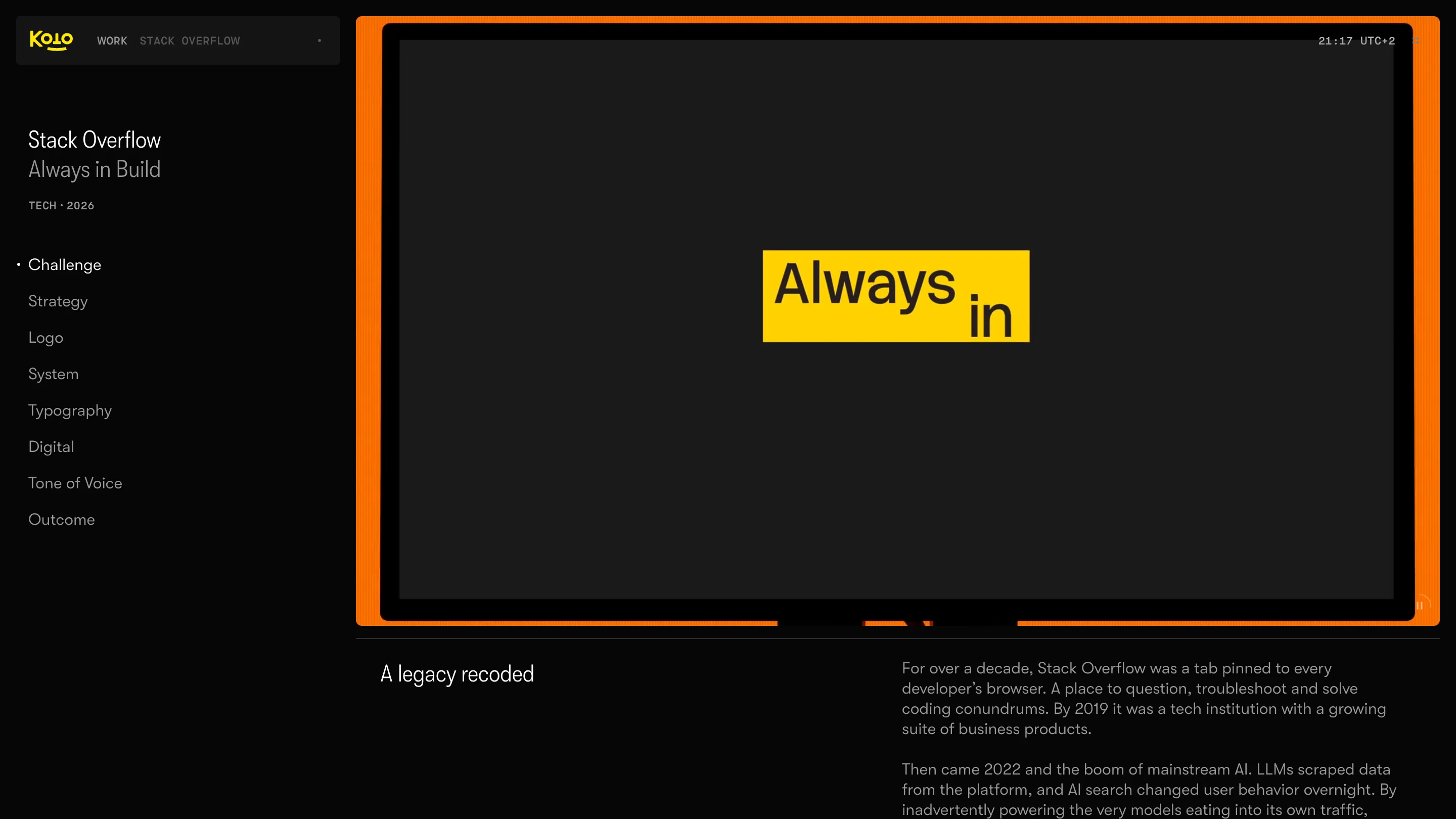
Stack Overflow just repositioned its whole brand around the one thing the AI models can't reproduce: the humans who wrote the answers in the first place. The studio behind it is Koto, and the case study went up under a line I keep turning over, "A legacy recoded."
Here's why a product person should care. By 2019 Stack Overflow was a tech institution, a tab pinned in every developer's browser. Then 2022 happened. LLMs trained on the site's more than twenty-four million questions, AI search changed how people look things up, and the platform ended up powering the models that were quietly eating its traffic. A rebrand can't fix a traffic chart. What it can do is pick a fight worth having, and Koto picked a clear one: fast answers only matter when you trust the knowledge under them, and that trust is something a community earns over years.
The idea is called Always in Build
The concept holding the system together is "Always in Build." The brand behaves like the thing it serves: modular, iterative, stacked up answer by answer. It's the rare strategy line that describes the visual behaviour instead of sitting on top of it.
The logo is the part I rate most. Koto simplified it to a single-colour mark of offset, stacked lines, and kept the toppling tower intact. That lean is the original insider joke, the literal "stack overflow" error the site is named after. Redrawing an eighteen-year-old mark and keeping the gag that made it is restraint most rebrands don't have.
Stack Sans, and a system built with Claude
They drew a custom typeface, Stack Sans, with a notch cut into the letters that nods to the building metaphor. It ships in headline and text styles and, the detail I like most, it's free on Google Fonts, so the community the brand is about can actually set type in it. On the case study you can toggle it live across five weights over a wall of orange.
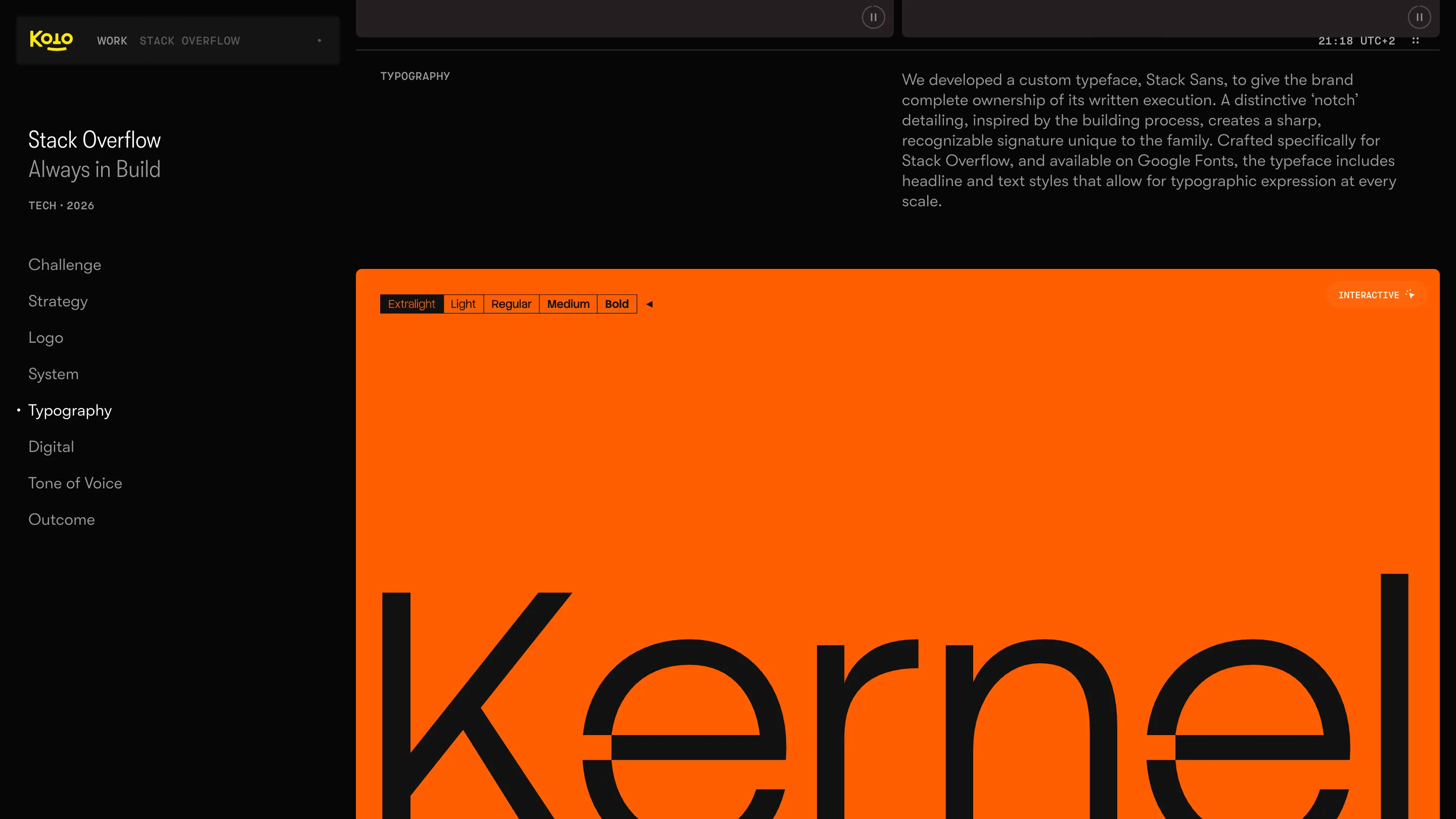
The visual system is generative. Koto built a custom tool, running on Claude, that lets the in-house team push composition, motion and colour to spin up assets without redrawing them each time. A brand that argues for "always in build" needs to keep moving, and hard-coding a hundred static layouts would have contradicted the whole premise.
The tone does the arguing
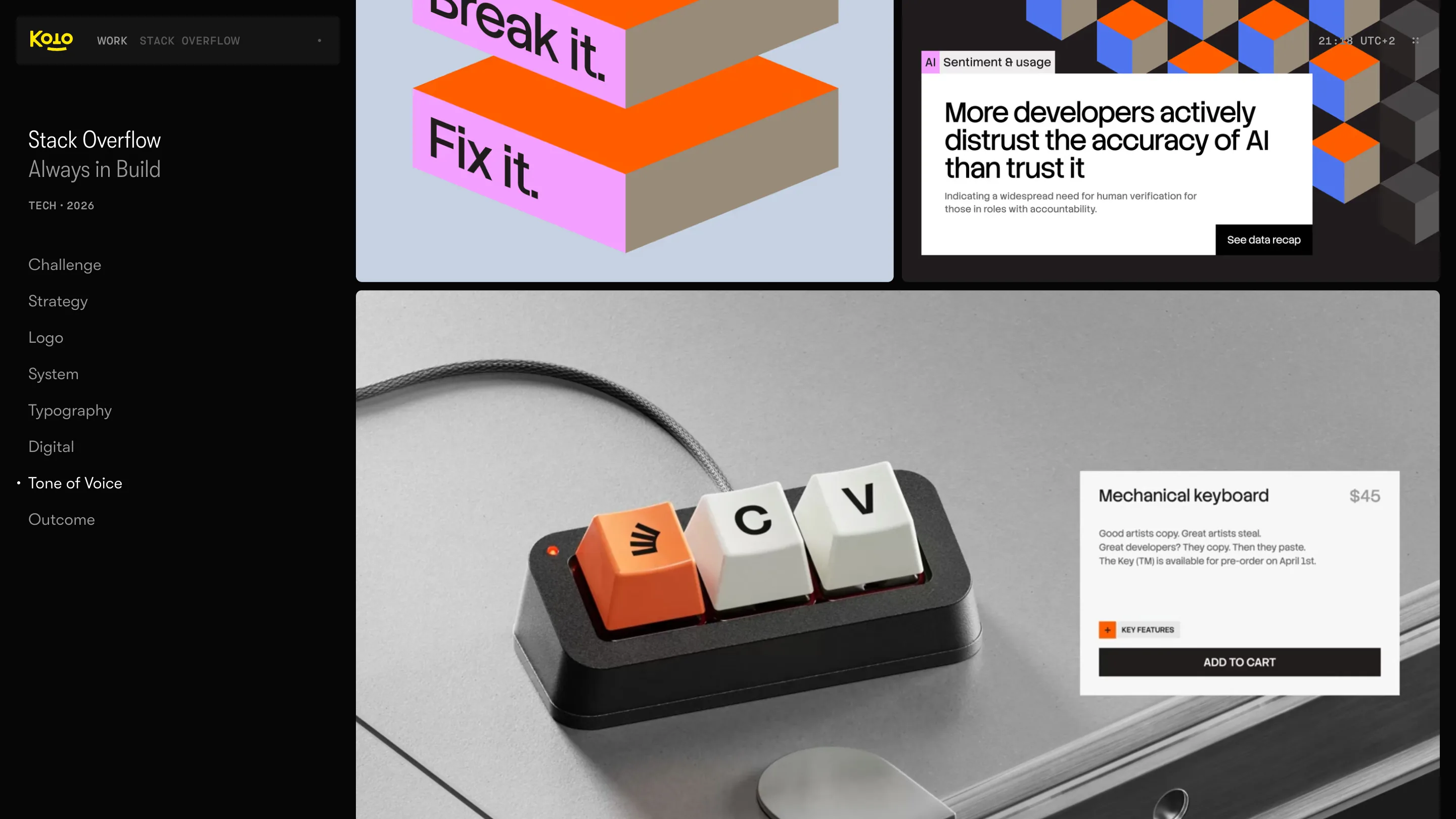
The writing is where the position gets sharp. The voice is dry: a mechanical keyboard mock reads "Good artists copy. Great artists steal. Great developers? They copy. Then they paste." A data panel states it flat: more developers actively distrust the accuracy of AI than trust it. That's the thesis in one chart. Human-verified is the product now.
The orange survived, which was the right call. It's one of the few brand colours in developer tooling you'd know as a single swatch, and layering it into blocks gives the system hierarchy without reaching for a second accent.
What I'd watch
Here's the tension, and it's the interesting part. The brand sells verified human knowledge as the moat against AI. Then you open the live homepage and the top card is "Stack Overflow for Agents: verified knowledge for the agentic era," with a snippet to paste straight into Cursor or Claude Code. Rather than fight the machines, they now sell the corpus back to them, framed as the trusted layer the models lack.
I think that's the honest move, and the smart one. The brand doesn't pretend AI didn't happen; it repositions the community's answers as the thing AI buyers pay for. The open question is the one no identity can answer: whether enough people keep showing up to write the answers once the main reader is a machine and not another developer. Strong work by Koto either way.
Featured: Koto