Hornet grew a strategy department instead of buying one
Perfect Stranger launched out of Hornet on 30 June with twenty people. The direction is the story: a studio that already knew how to make the work went and hired the people who decide what the work should be.
A production studio grew a strategy department, and the direction of travel is what caught me. On 30 June, Perfect Stranger launched out of Hornet, the New York animation and design studio that has been making work for 25 years. Twenty people. Daniel Fries as executive creative director. Clients across the two companies include Trimble/SketchUp, eero, Homes.com and Kodansha, the century-old Japanese manga publisher.
Which end they started from
Fries says they built it "in response to a very real need we were seeing from brands for a more agile, integrated creative partner." Every launch release says a version of that sentence. What makes this one worth a second read is the starting point. Hornet already knew how to make the thing. It added the part that decides what the thing should be. The familiar version of this story runs the other way: an agency full of strategists buys a production arm so the work stops losing money and meaning on its way out the door.
Starting from craft and adding thinking is harder to fake. You can write a strategy deck about motion. You cannot fake 25 years of shipping it.
The site says it in three sections
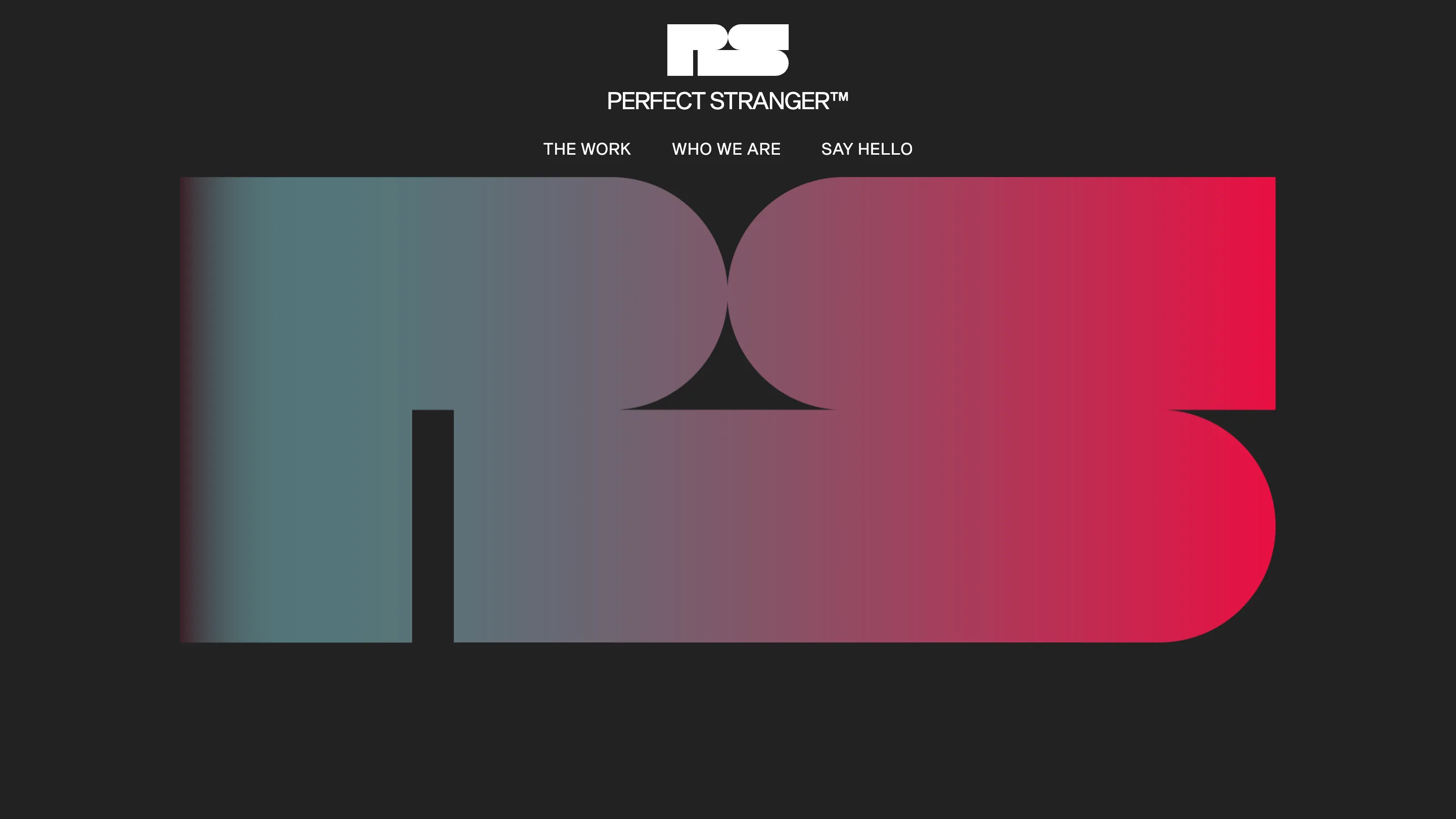
The site is one page with three anchors: The Work, Who We Are, Say Hello. No case study index, no services grid, no team page with headshots. The wordmark sits in a teal-to-crimson gradient that fills most of the first screen, and the counters of the P and the S almost touch, which is the whole logo idea in one move. I like the confidence of a launch site that gives you three places to go and trusts the work to carry the rest.
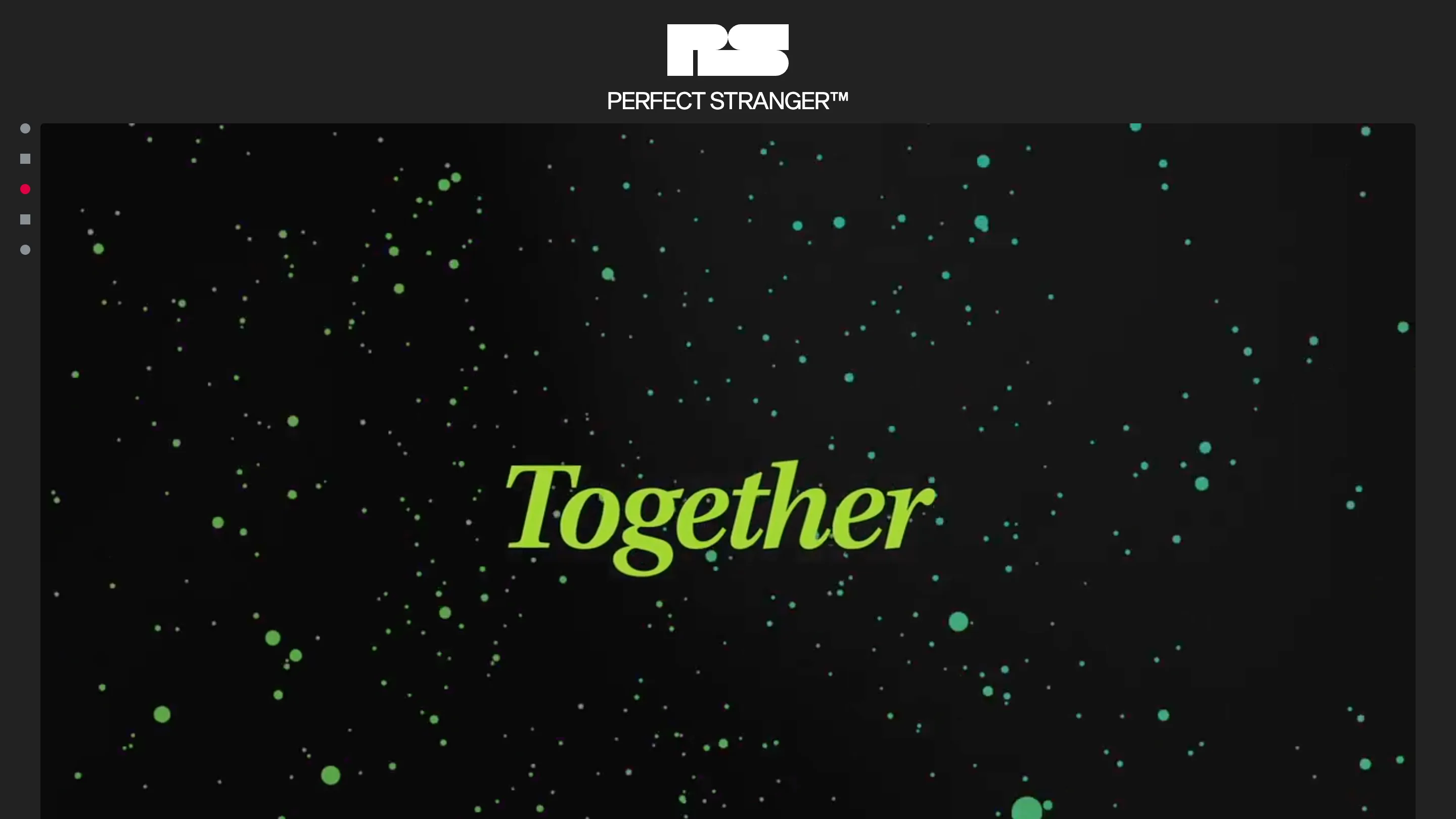
Halfway down, the word "Together" arrives in a green italic script over a field of scattered dots. It is the only piece of type on the site that isn't the grotesk, and it lands because everything around it is so plain. One serif in a whole page of sans is a stronger signal than a font pairing chart.
The work backs the claim, partly
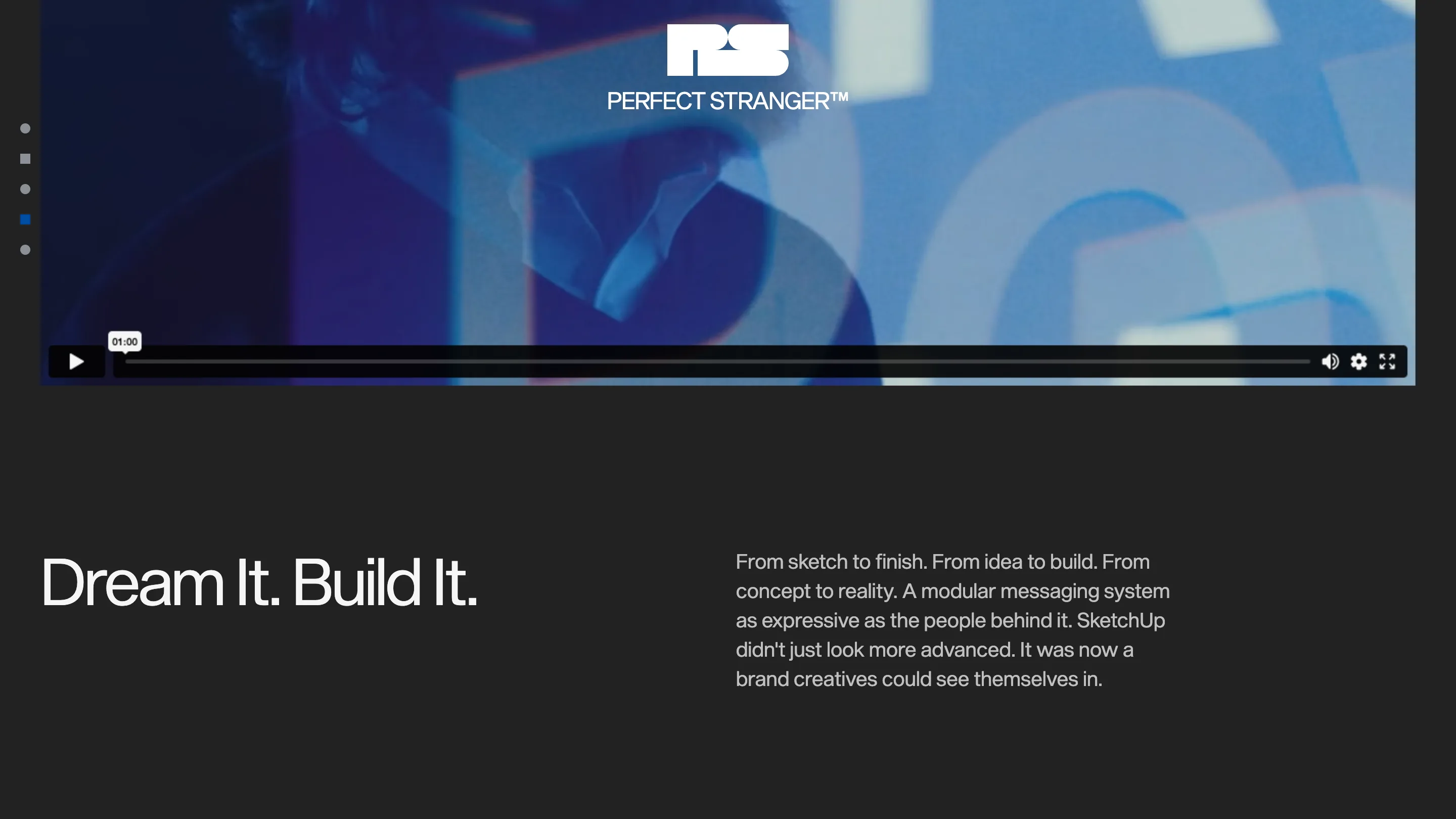
The SketchUp case is the one I'd point a client at. Headline reads "Dream It. Build It." and the body copy describes a modular messaging system rather than a campaign, which is the tell that a brand designer was in the room and not just a director. The line they close on: SketchUp "was now a brand creatives could see themselves in." That is a product-design sentence dressed as an advertising one.
What I'd take from it
If you make digital products, the same move is available at your scale. The people I see doing well right now started from the craft end and grew forward into the decisions, and they got taken seriously because the making was already proven. The reverse path, deciding first and learning to build later, keeps running into the same wall: nobody can check your judgment against anything.
The caution is size. Twenty people is a claim, not a proof. Hornet's 25 years are real; Perfect Stranger's first year is not written yet. Ask me in July 2027 whether the strategy stuck to the craft or floated off it.
Credit and link: Perfect Stranger, launched 30 June 2026 out of Hornet.
Featured: Perfect Stranger (Hornet)